What Causes It Around Here
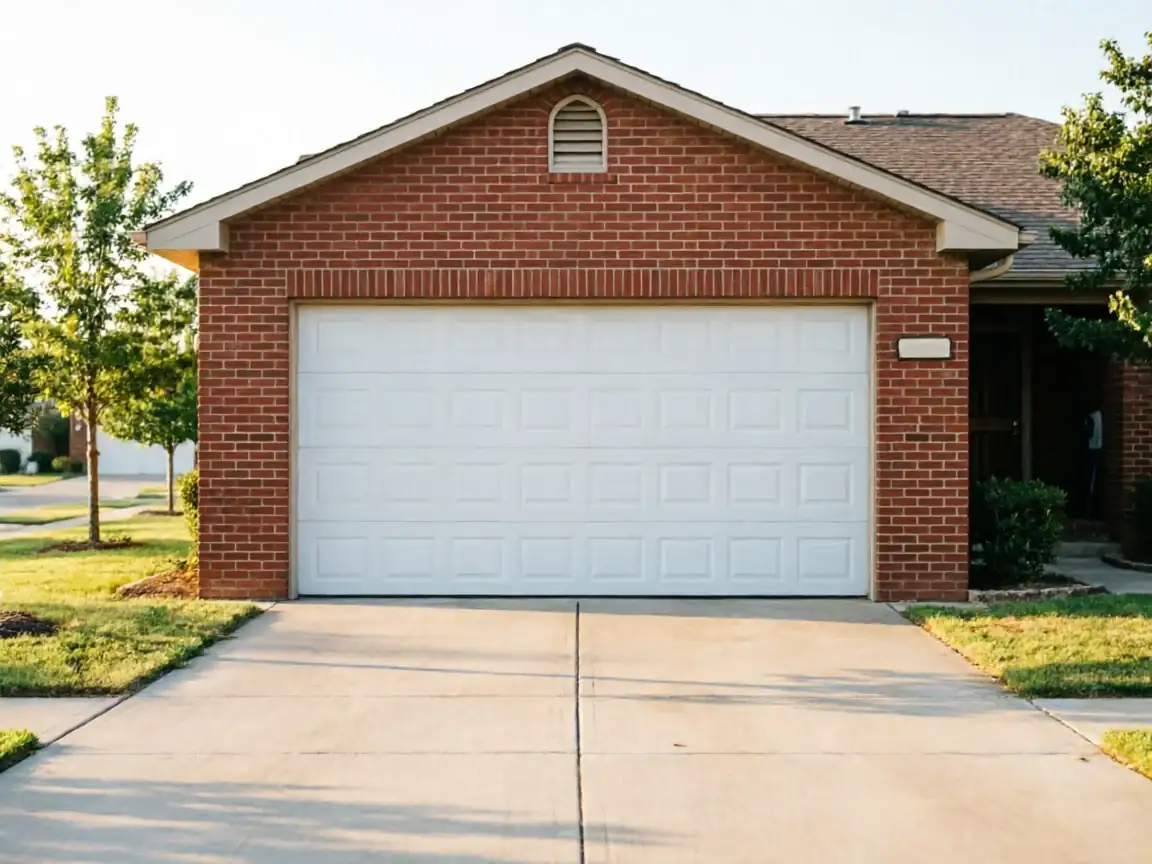
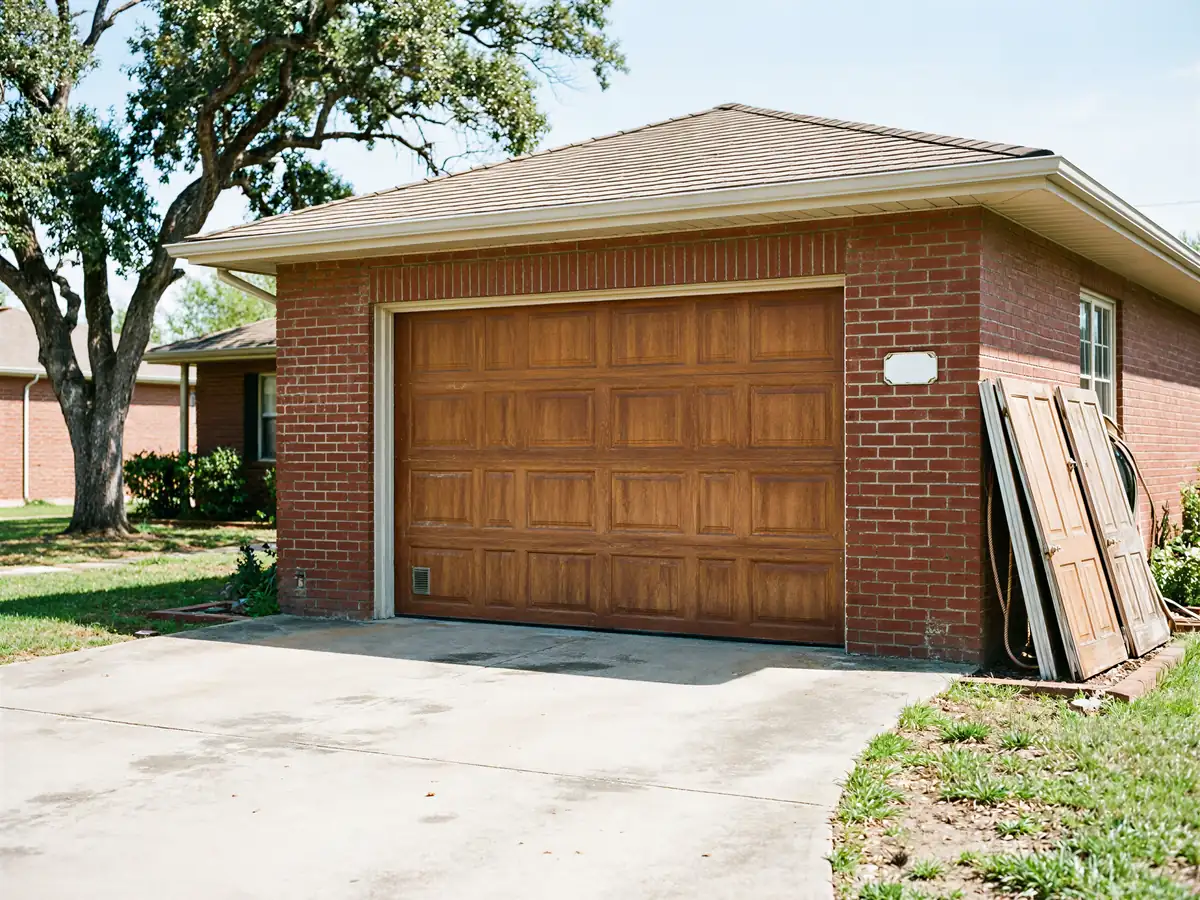
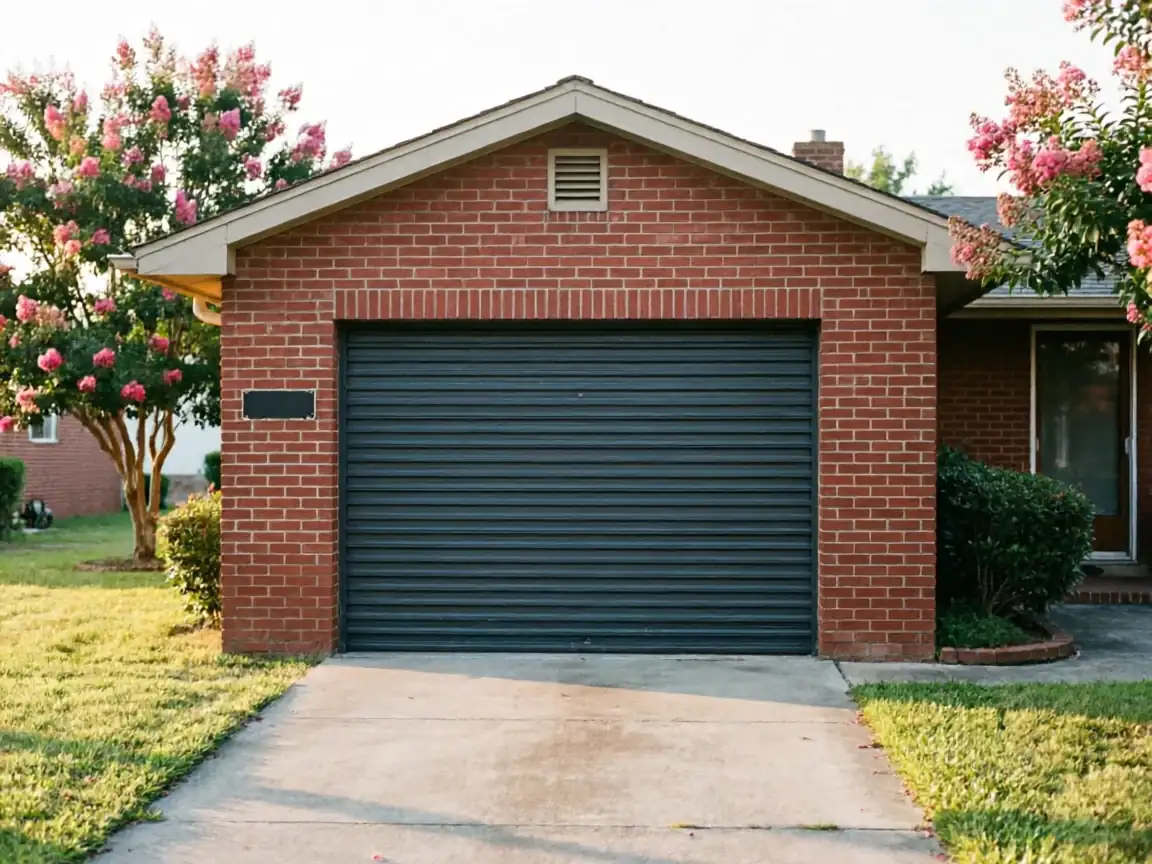
Most houses in Jefferson went up around 1958
Which puts a lot of this neighborhood ahead of the area's broader 1980s median build year. That gap matters. A door and opener installed when a house was new in 1958 has had more than six decades to wear through springs, cables, and rollers that were never swapped out. We still find original torsion springs on these houses - the kind rated for a weight and door size that doesn't match anything sold today.
With about 5,132 households in Jefferson
A good share of that stock is older single-car and two-car garages built with steel doors and hardware sized for the period. The mild, occasional-freeze climate here doesn't crack panels the way a hard winter would, but humidity swings still rust springs and pit cables over the years, especially on doors that sit a few inches from grade.
- 5,132 households
The failure we see most in this pocket is a broken torsion spring on an original setup
Not a modern extension-spring system, but the older side-mounted torsion hardware that a lot of newer trucks don't carry stock parts for anymore.
Parts We Carry
Because Jefferson's housing skews older than much of the wider service area, we carry torsion springs sized for older door weights, not just the common modern sizes. That includes springs for single-panel steel doors from the 1958-1970s run of construction, plus the cable and drum combinations that typically fail alongside them.
We stock standard rollers, extension springs, and universal opener logic boards for the newer installs mixed into the same blocks, since Jefferson isn't a uniform build year - some houses have been fully replaced, others haven't touched the original door since it went in. What we don't carry on the truck is obsolete opener remotes or discontinued drive gears for openers no longer made; those are special-order and we'll tell you straight if that's what you're facing.
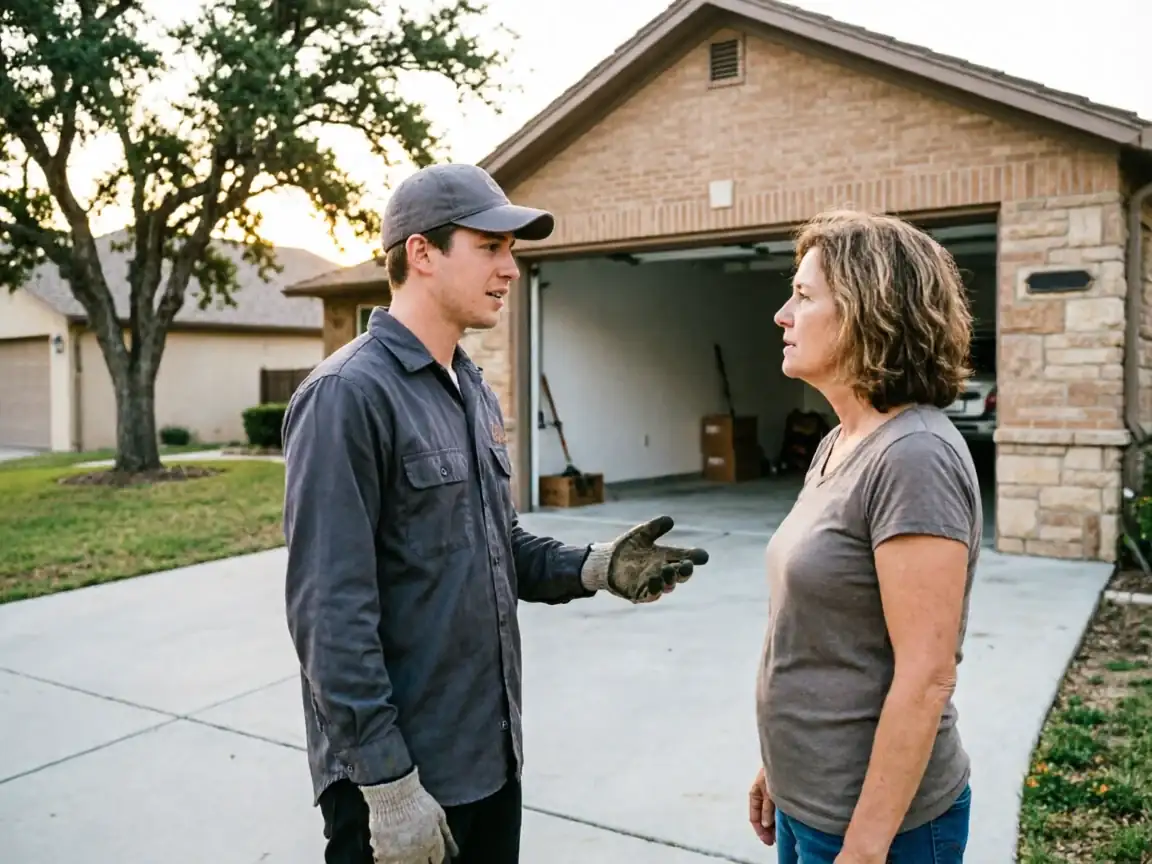
If your door is original to a 1958-era build and the spring has never been replaced, tell us that up front when you call. It changes which spring size we bring, and it saves a second trip.
How Long It Takes
A straight spring replacement on a standard door is a same-visit job once we're on site - no need to order anything if it's a common size. Where it slows down is diagnosis on original hardware: a 1958-era torsion system sometimes needs us to measure wire gauge and wind direction by hand because there's no label left to read, and that adds time before any repair starts.
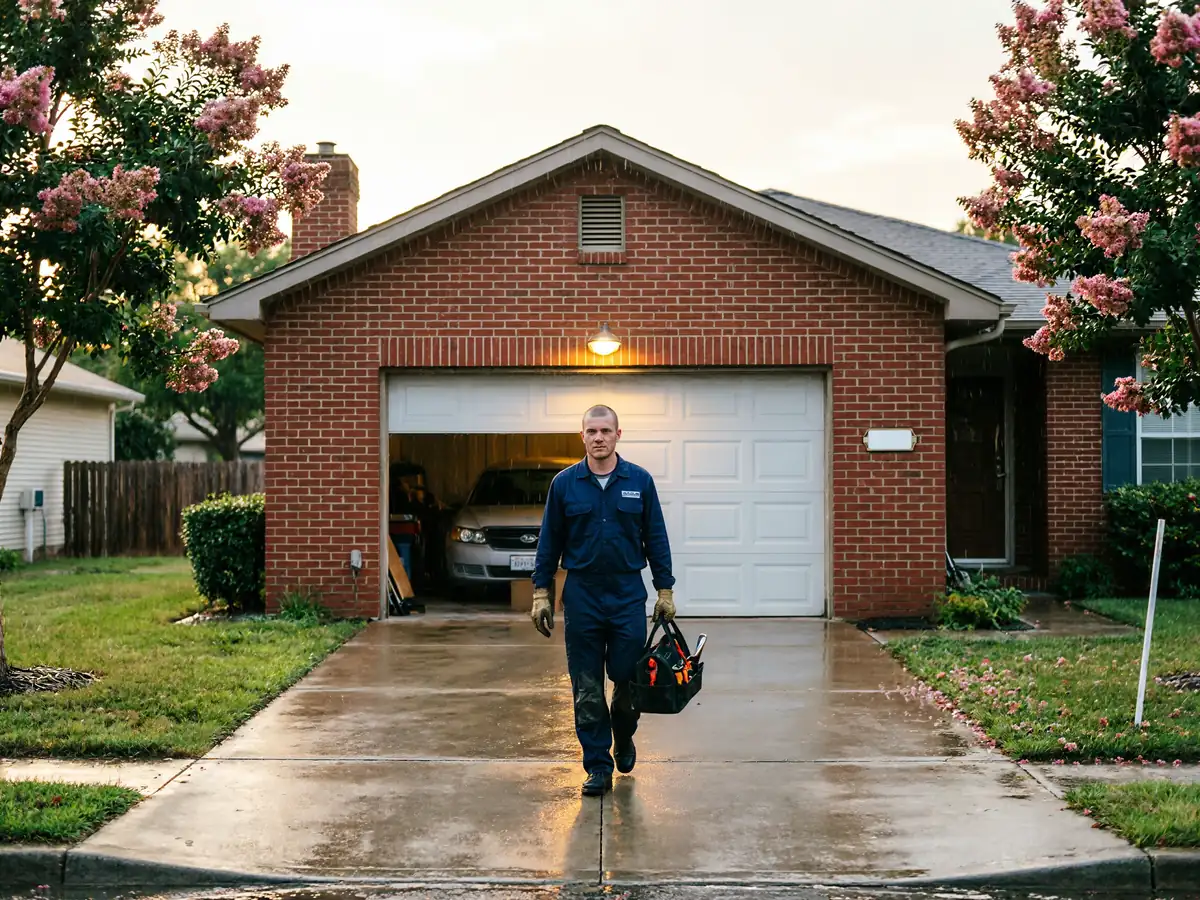
Opener boards and obsolete remotes are the other slow point. If the part isn't something we carry, it comes down to supplier lead time, and we won't promise a number we don't control. We travel from Metairie, about 3 miles out, so we're not quoting a response window tied to a local branch - there isn't one here. What we can tell you is that most jobs, once we're looking at the door, get fixed in one visit.
Where This Job Goes Sideways
The most common mistake on an older Jefferson door is someone replacing a broken cable or roller without checking the spring that's been carrying the same load since 1958
The new part fails again in months because the spring was already weak, not because the part was bad.
The second place this goes wrong is opener mismatch
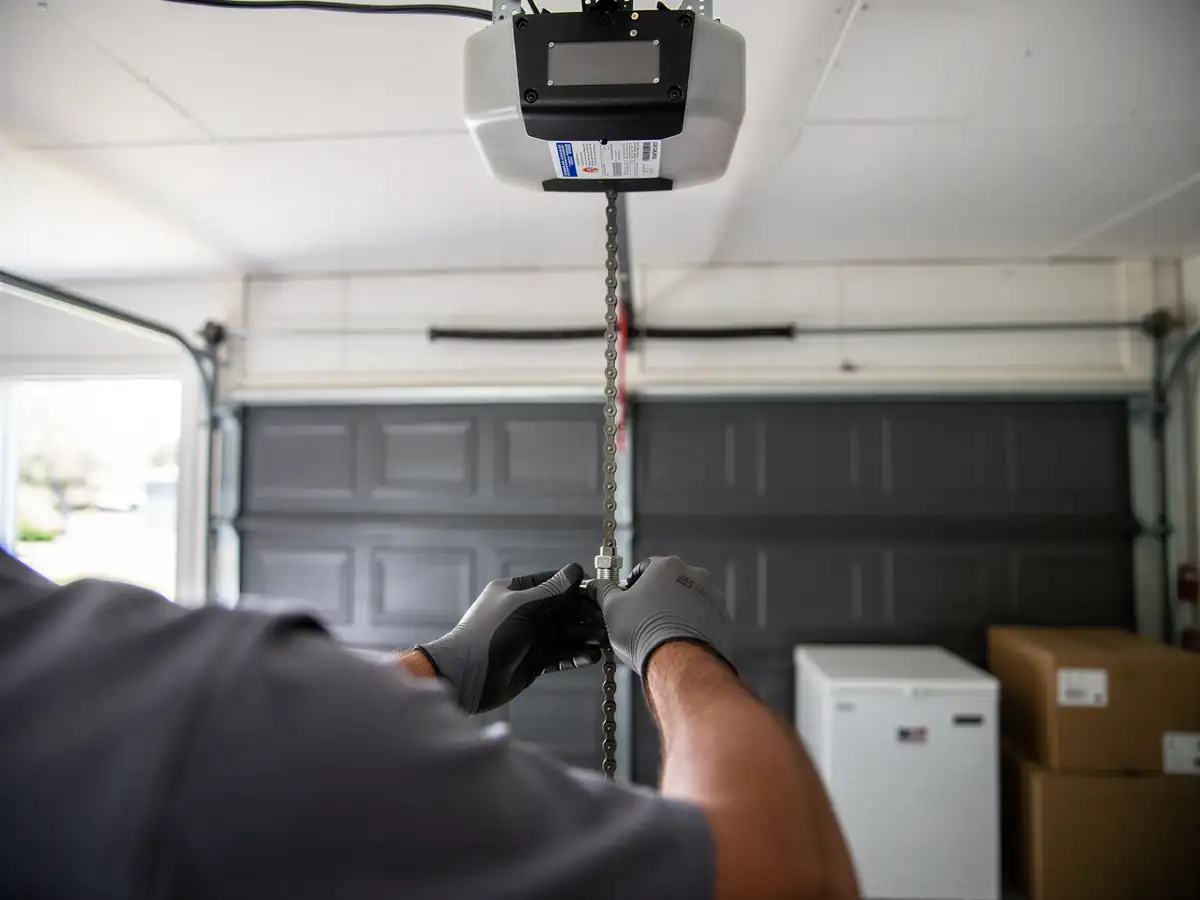
A homeowner replaces an opener on an original door without rebalancing the spring tension first. Modern openers have safety reversal sensors that an out-of-balance door will trip constantly, and the owner ends up thinking the new opener is defective when the door itself is the problem.
Third: on houses where the median income runs below the area's broader $67,099 figure
Jefferson sits around $56,875 - we see more patch jobs stacked on top of each other over the years. Nothing wrong with stretching a repair's life, but three patches on a 1958 door usually means the next failure takes the whole assembly with it, not just one part.
What the Fix Involves
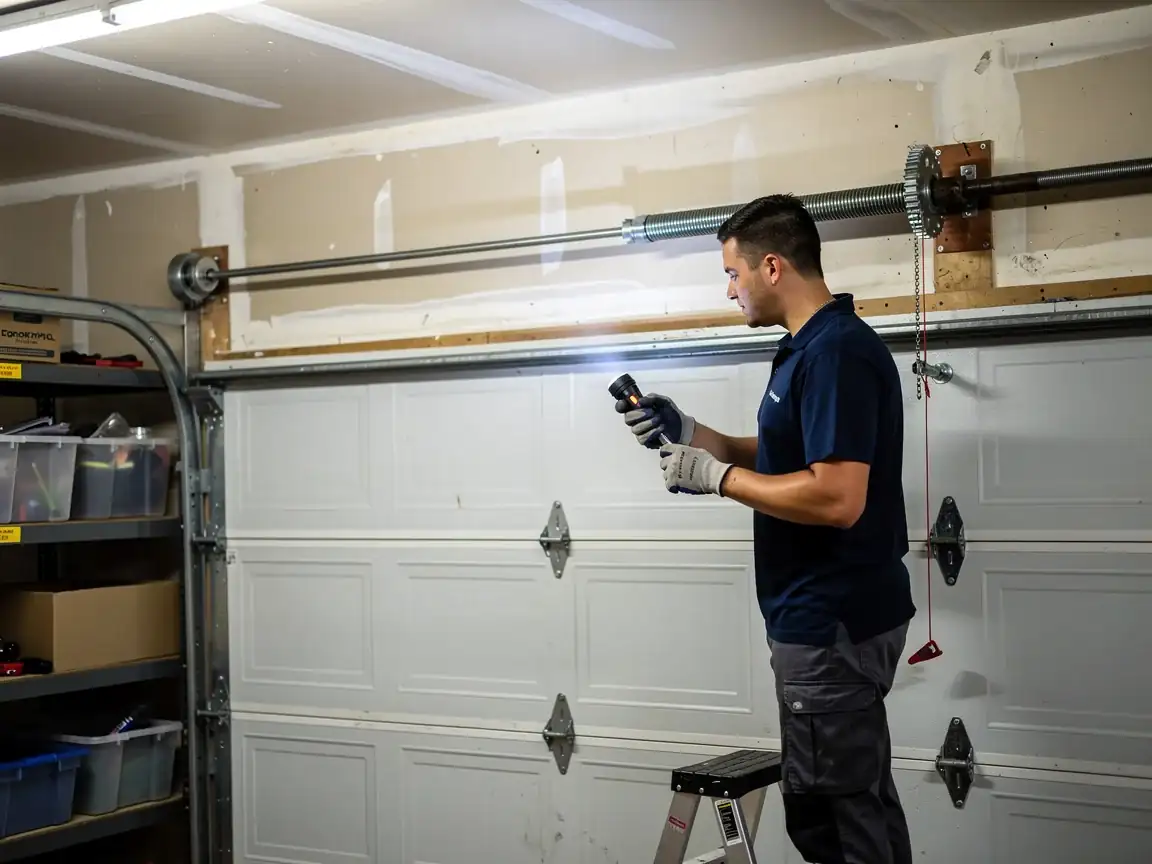
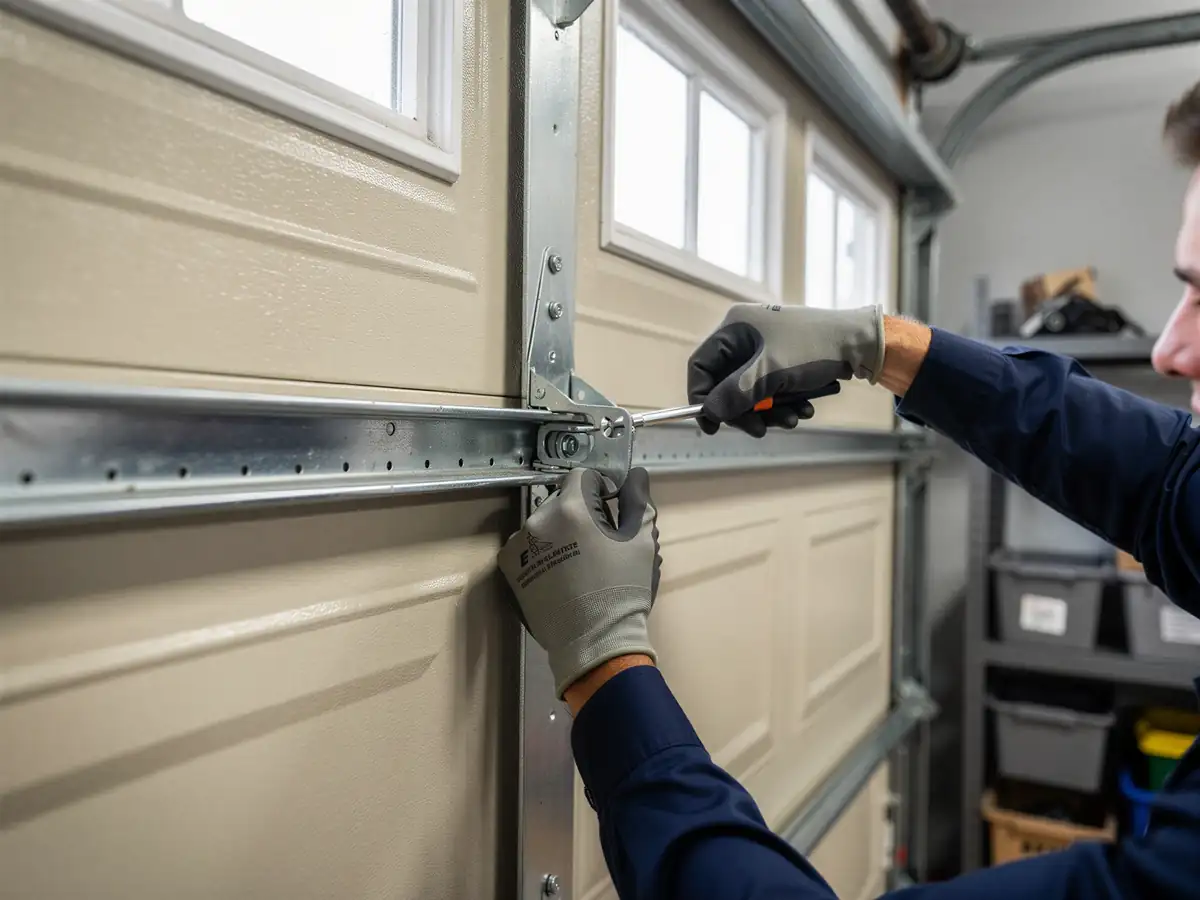
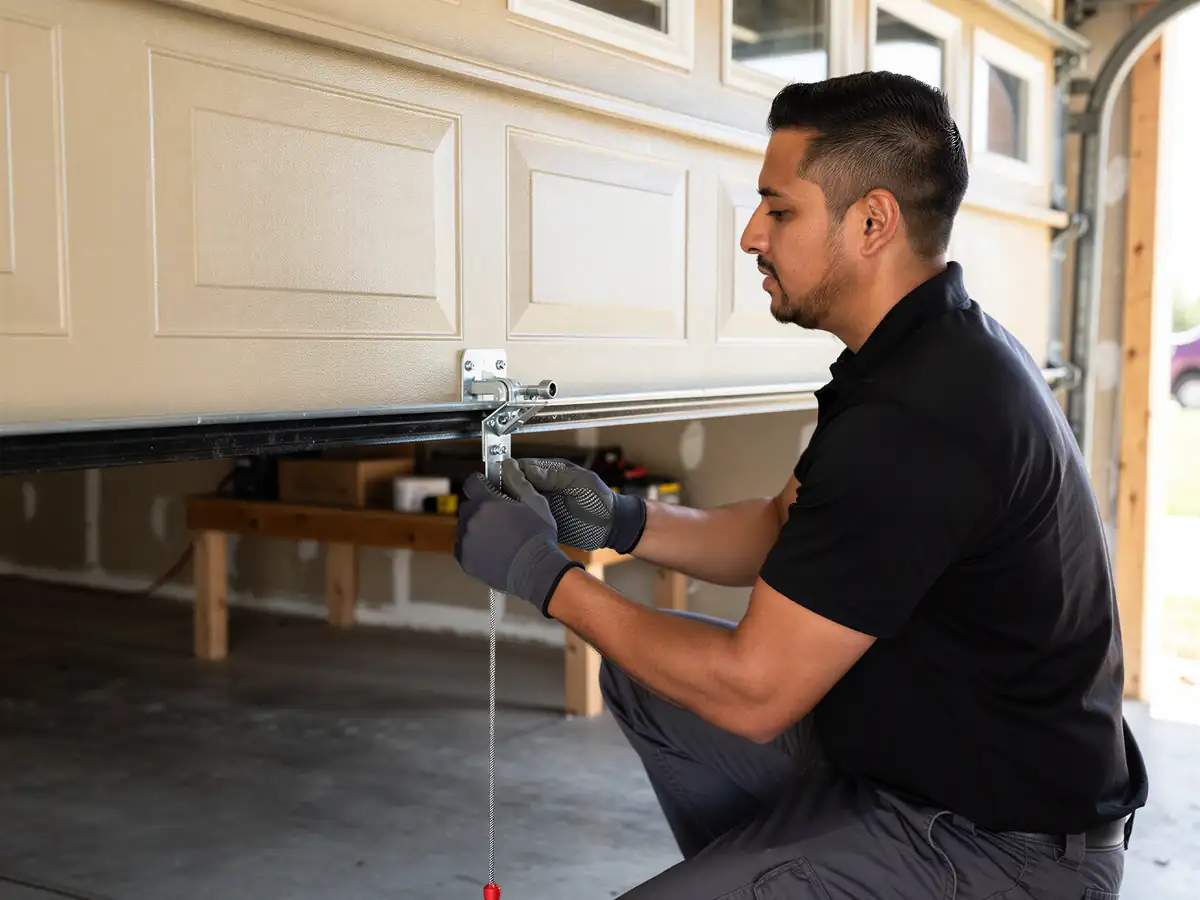
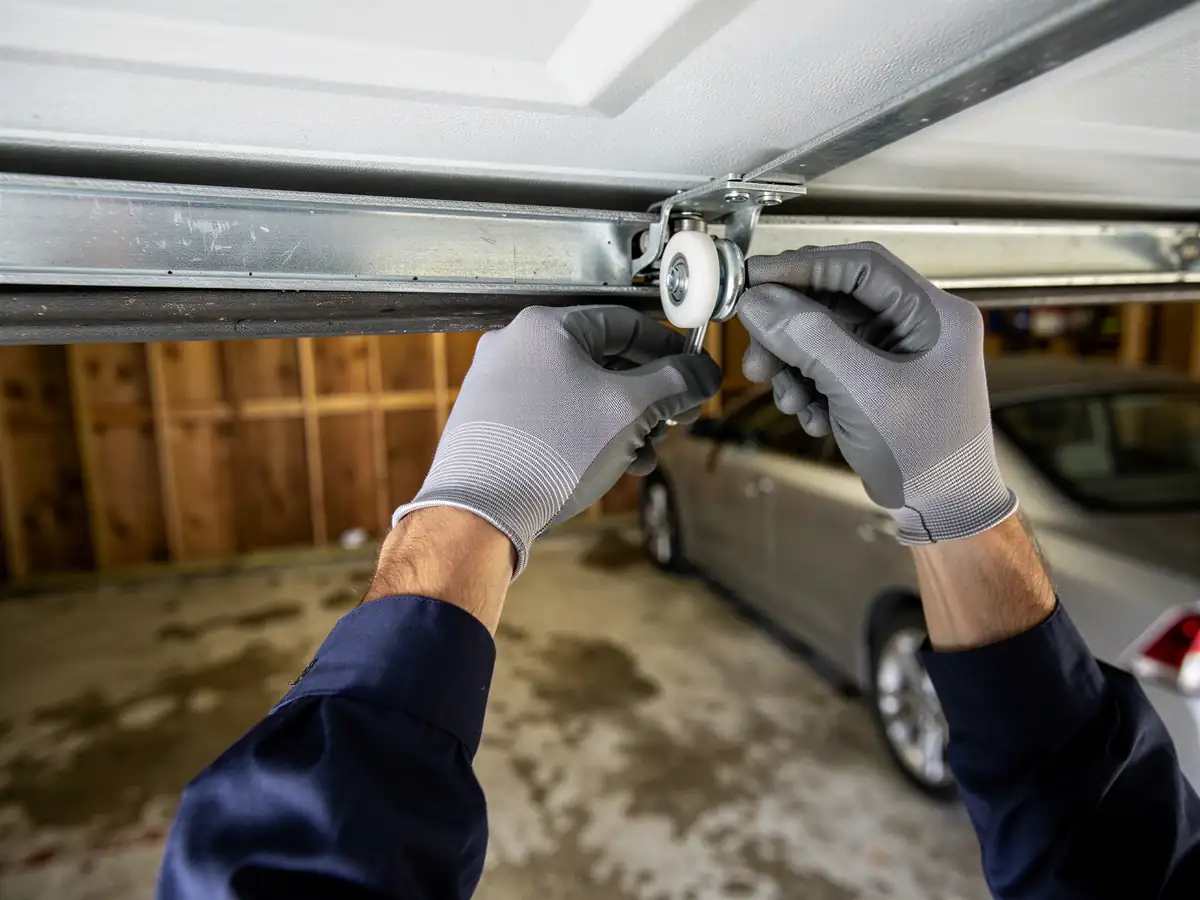
For a broken spring, we unload the tension safely, pull the old spring, measure the door weight and wind direction, and install a matched replacement - this is not a job to do with the door under load. For a cable or roller job, we release tension first, then swap the worn part and recheck balance before we leave, because a door that's out of balance after a repair will just break something else within a season.
On original 1958-era hardware we also check the mounting brackets and header, since six decades of a steel door swinging on the same bolts can loosen the structure around it even when the spring and cable look fine. If the track is bent or the drum is cracked, we replace those too rather than leaving a weak link next to a new spring.
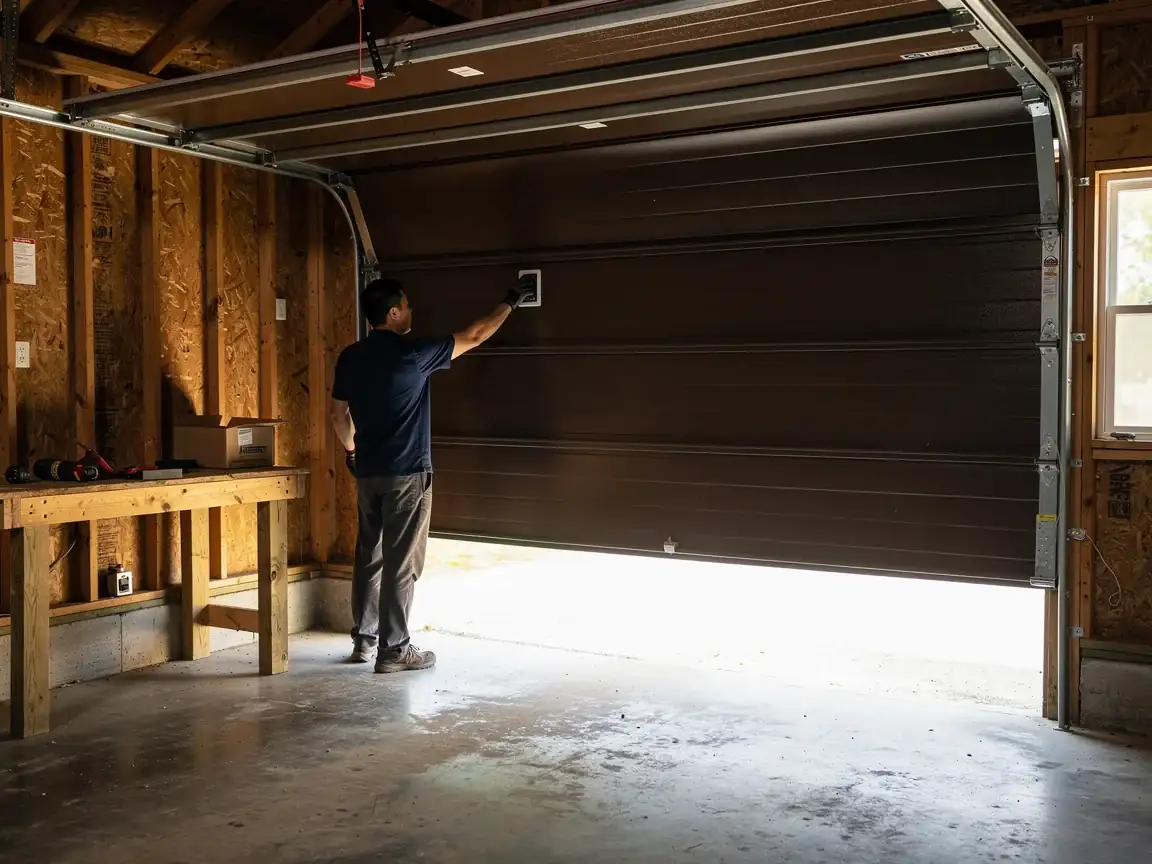
We test the opener's force settings and auto-reverse after any spring work, every time, not as an upsell - it's the part that keeps a repair from becoming a safety call.
Doing It Yourself
A torsion spring is not a DIY repair, on a 1958 door or a new one. The spring is under enough tension to cause serious injury if it lets go while you're working on it, and that's true no matter how handy you are. We'd rather tell you that plainly than let you find out the hard way.
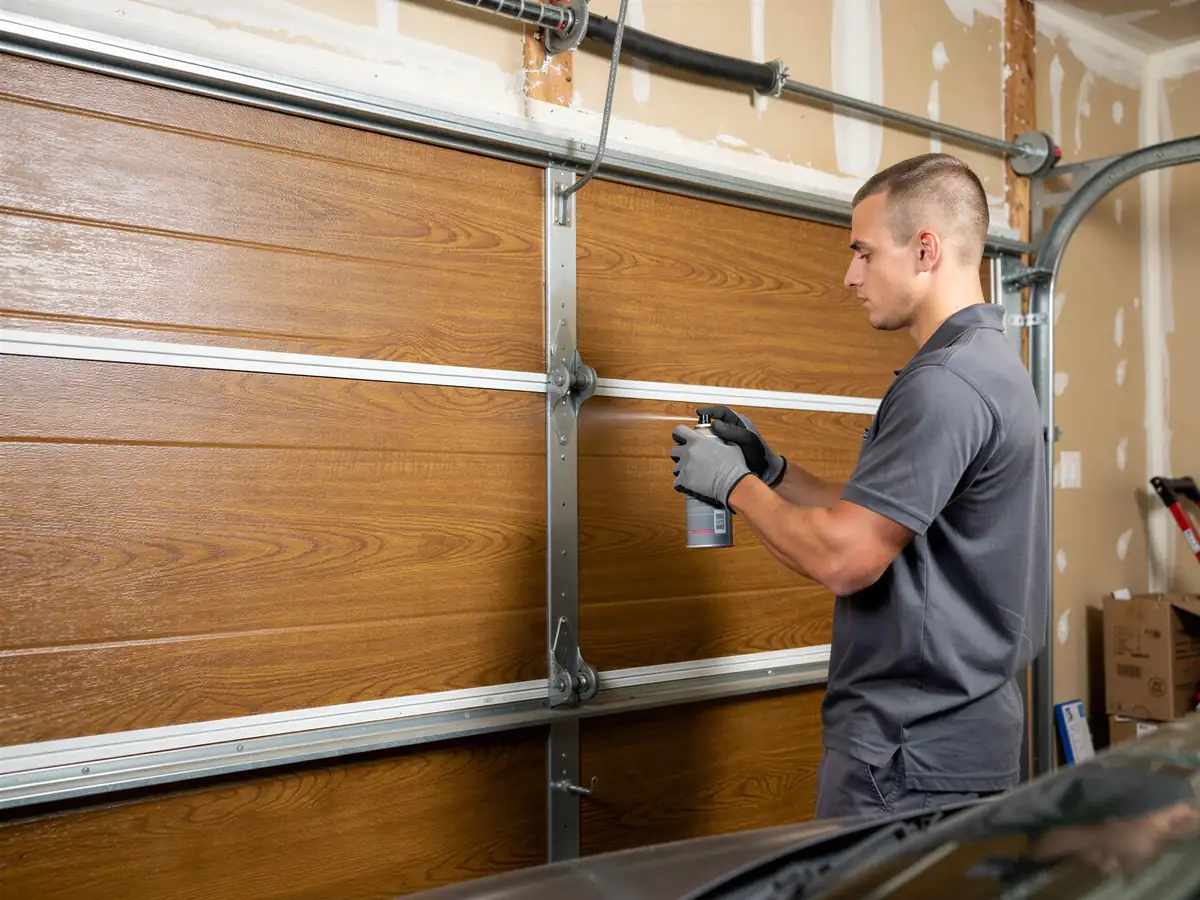
What you can reasonably check yourself: whether the door is noisy on one side versus the other (uneven wear, worth mentioning when you call), whether the opener's safety sensors are aligned, and whether weatherstripping at the bottom has worn through, which is common on houses this age and doesn't need a truck to fix.
One honest limit on our end - we don't carry every discontinued opener logic board or remote for openers that stopped being made years ago. If your opener is old enough, replacement sometimes makes more sense than chasing a part that isn't being manufactured anymore, and we'll say so rather than stall you on a special order.