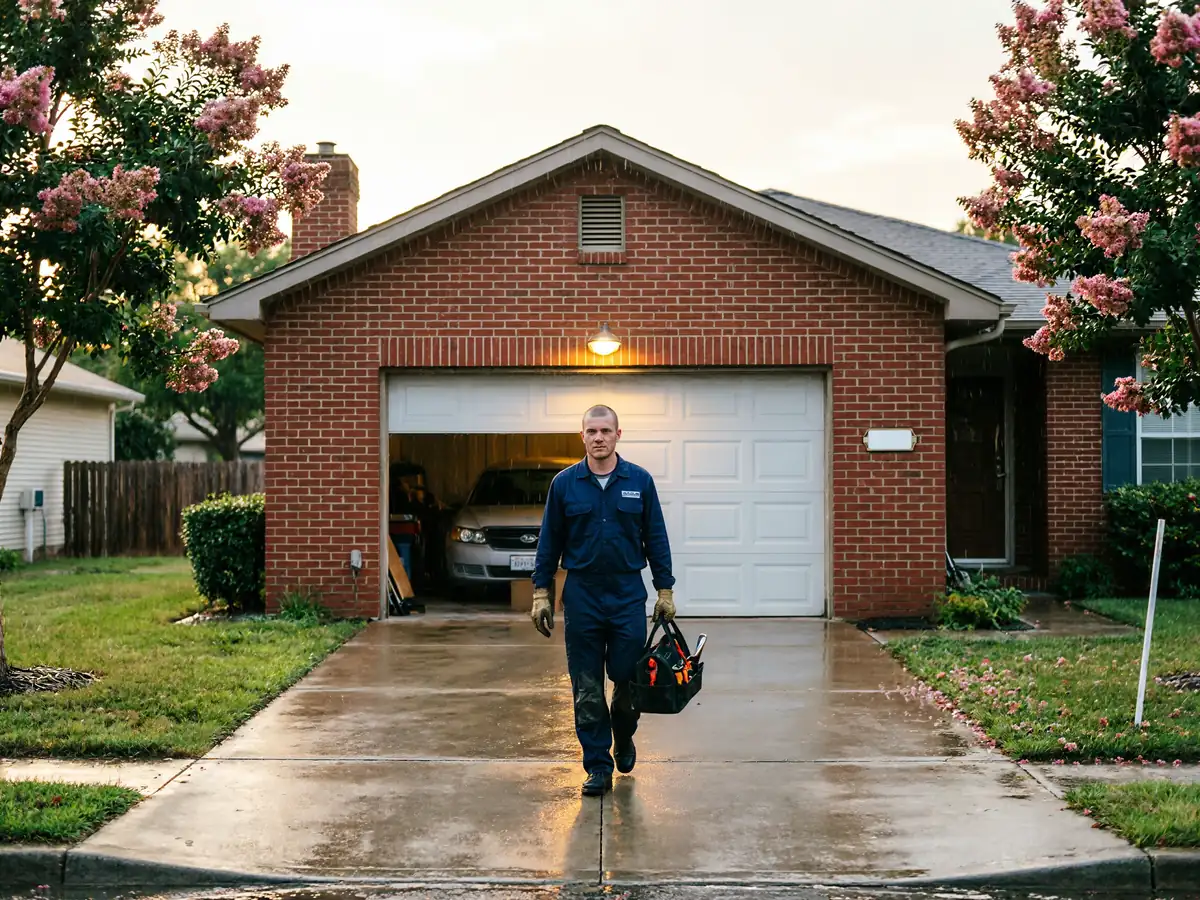
The Noises Your Metairie Garage Door Makes, and What They're Telling You
Most Metairie homes date from 1958 to 2001, and the mild, occasionally freezing climate affects doors differently than in colder states. Here's what each noise means.
Metairie doesn't get the hard freeze-thaw cycles that crack concrete and seize hardware up north. The climate here sits in a mild band with only occasional freezes, which is easier on steel than a true winter is. But easier isn't the same as nothing. Humidity swings hard across the year, and that moisture gets into everything metal on your door - the hinges, the track bolts, the spring coils. Instead of rust from road salt, you get surface rust from humidity sitting on unlubricated parts for months at a time. A door that sounds fine in February can start grinding by August once the air thickens up. The occasional freeze snaps already-brittle lubricant and tightens metal just enough to turn a quiet squeak into a sharp one overnight. If your door suddenly gets loud after a cold snap, that's not coincidence - it's old grease contracting on parts that were already due for attention. None of this is dramatic weather. It's slow, humid wear that shows up as sound before it shows up as a stuck door, which is exactly why paying attention to noise matters more here than tracking a storm.
When to Get Help
A grinding or scraping sound when the door moves usually means metal touching metal where a roller should be doing the work - call before it gets worse, not after it stops moving entirely. A loud bang, especially from a double door, can mean a cable has slipped or a spring has let go, and that's not a do-it-yourself afternoon. With housing in this area built mostly between 1958 and 1980 median, a lot of original hardware is still out there, and old torsion springs don't give much warning before they go. If the noise is rhythmic and ties to one spot on the track, that's wear you can usually wait a few days on. If it's sudden, sharp, or comes with the door moving unevenly on one side, stop using it and get it looked at. We don't push replacement on anything that can be repaired, but on a door this old, sometimes the honest answer is that a part isn't worth sourcing anymore.
What Is Going On
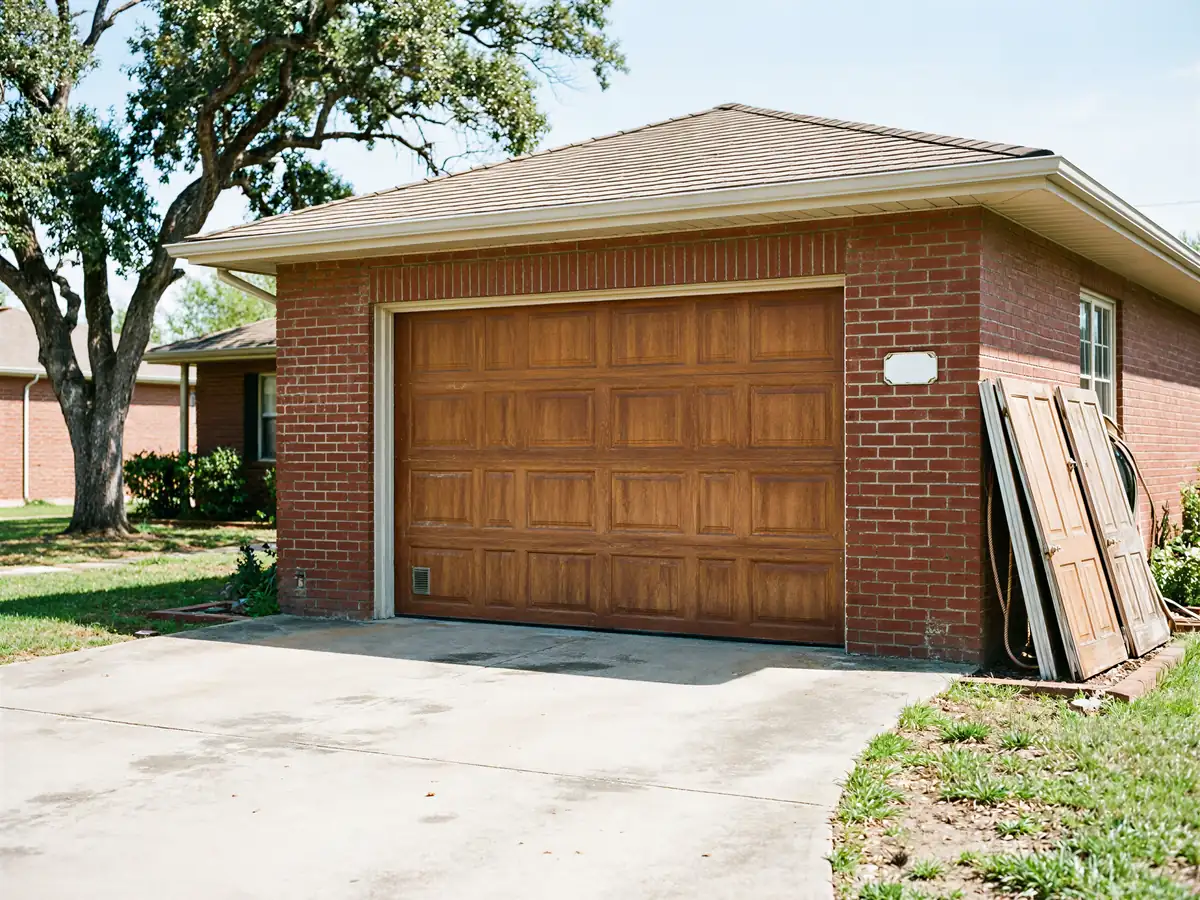
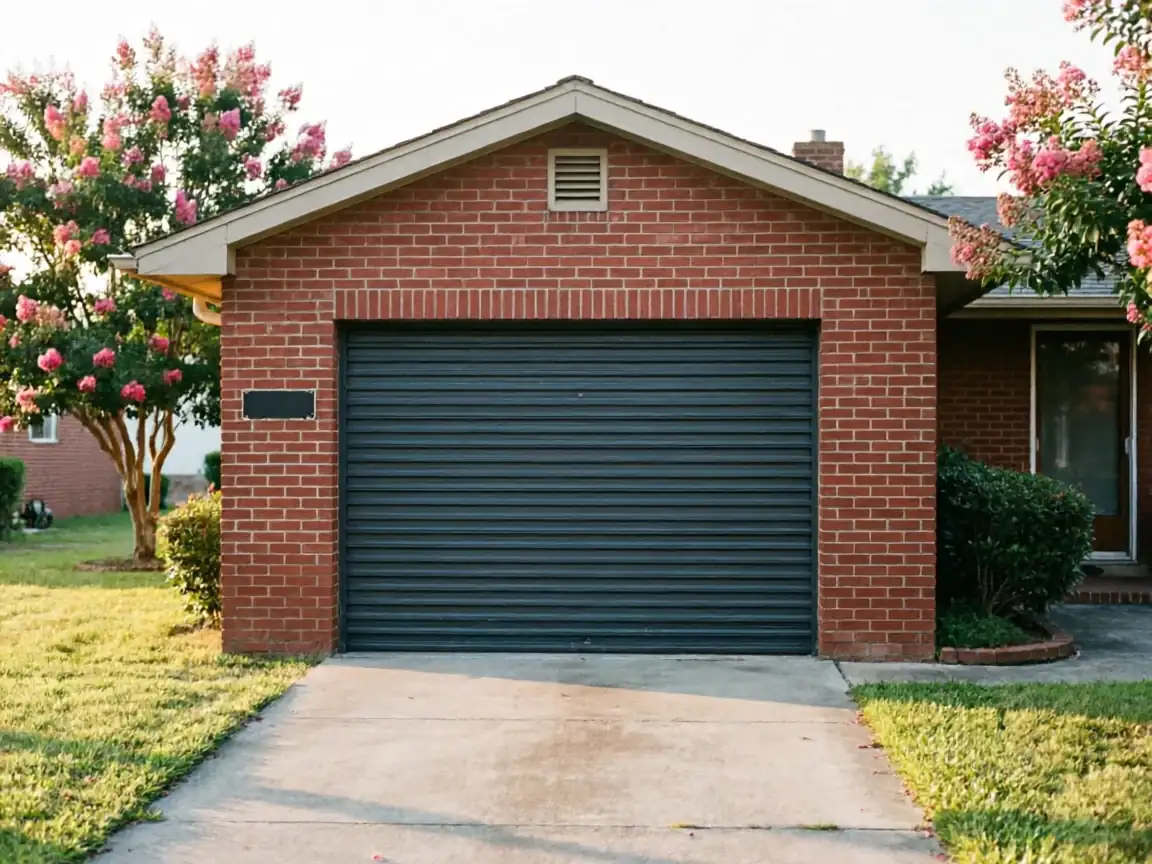
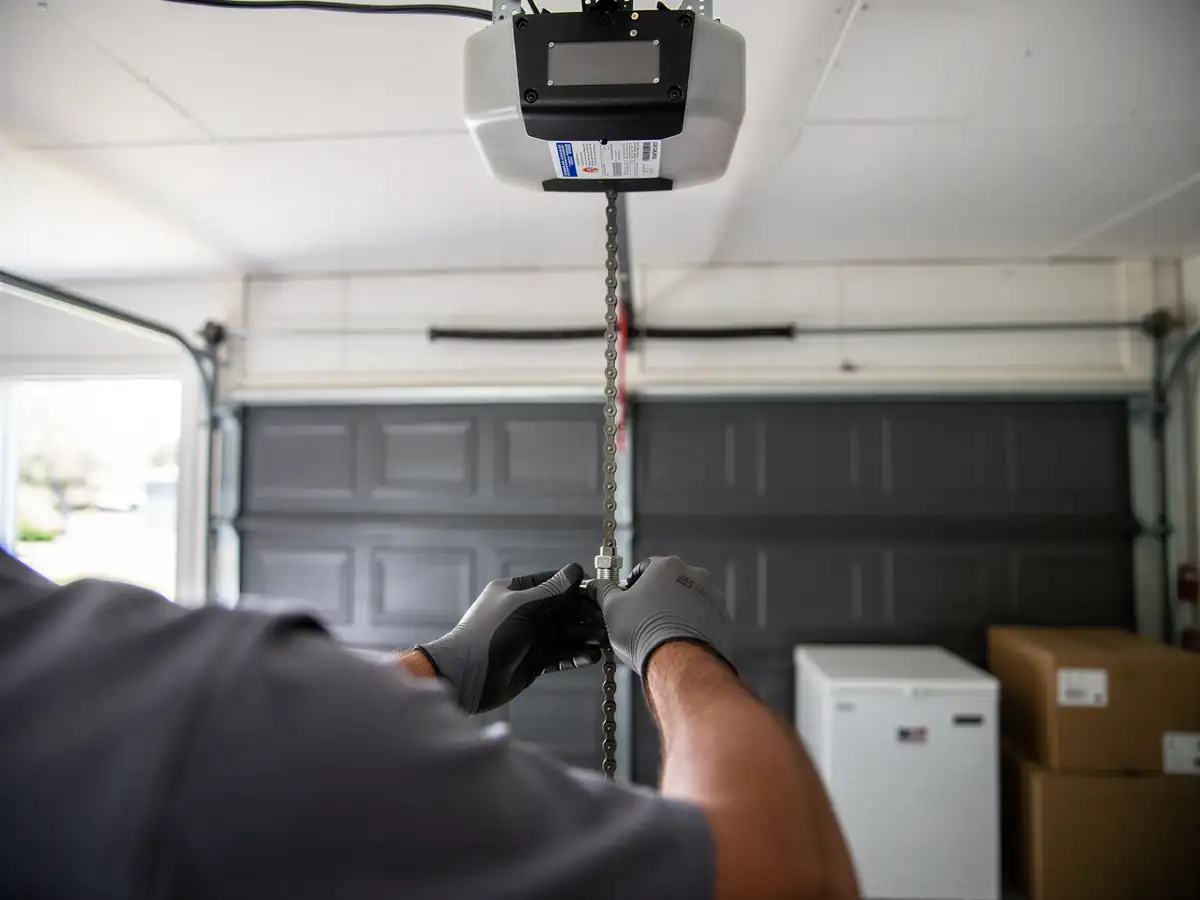
Houses across this area were mostly built between 1958 and 2001, with a lot of stock from the 1980s and 90s. That matters because the doors and openers installed when those houses were built are often still the originals, or close to it - nylon rollers that have hardened and cracked, steel hinges worn oval at the pivot point, torsion springs rated for a lifespan they've long since exceeded. A squeak from a 1980s install is usually dry rollers or a hinge pin that's lost its lubrication. A rattle from a newer door, closer to the 2001 end of that range, is more often a loose track bracket or a chain that needs tightening. The sound is different because the hardware generation is different, even within the same neighborhood. Older openers also tend to run louder by design - chain drives were standard then, belt drives weren't common yet - so some noise on an original system is just how it was built, not a sign of failure.
What to Check
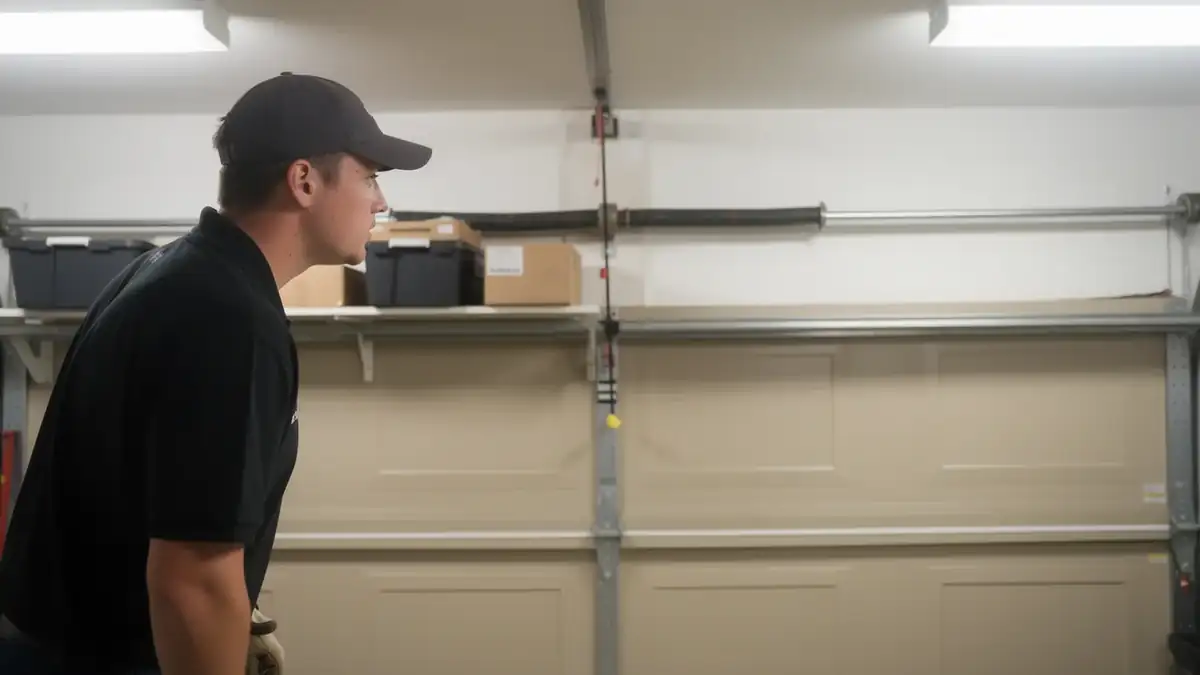
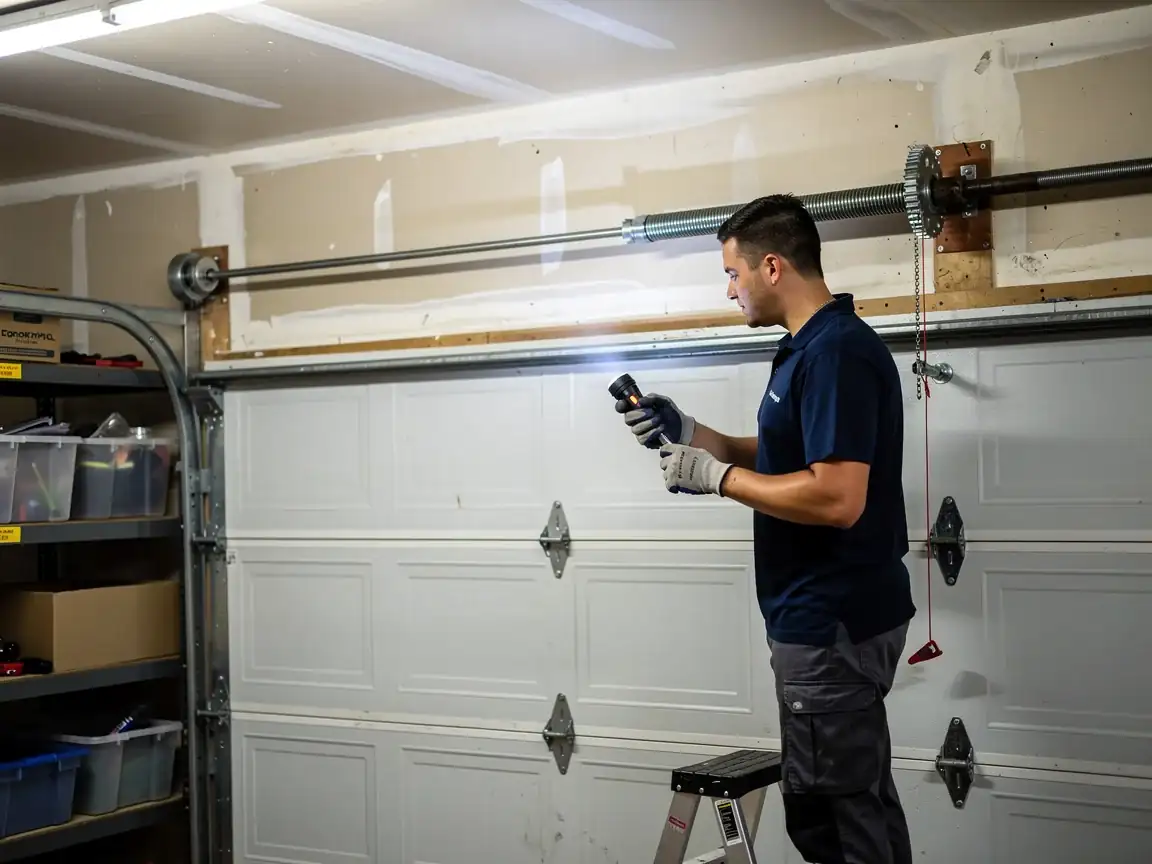
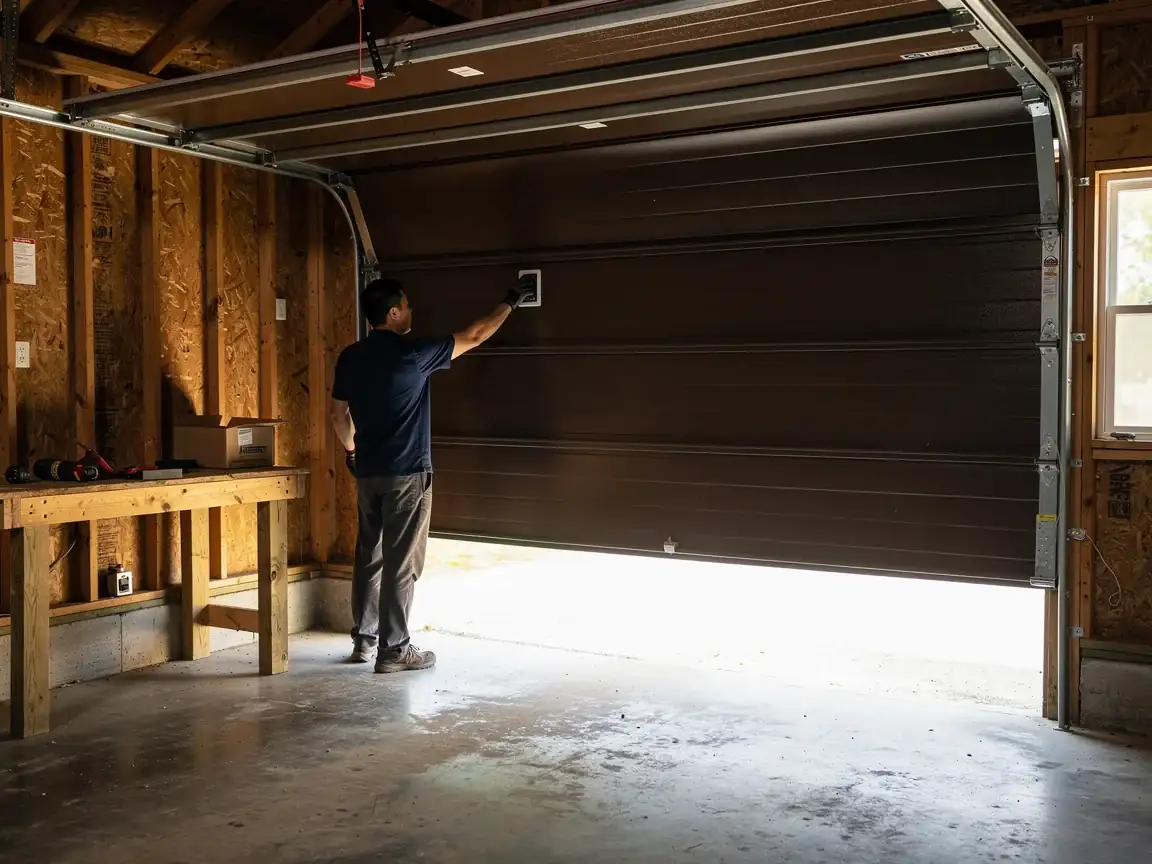
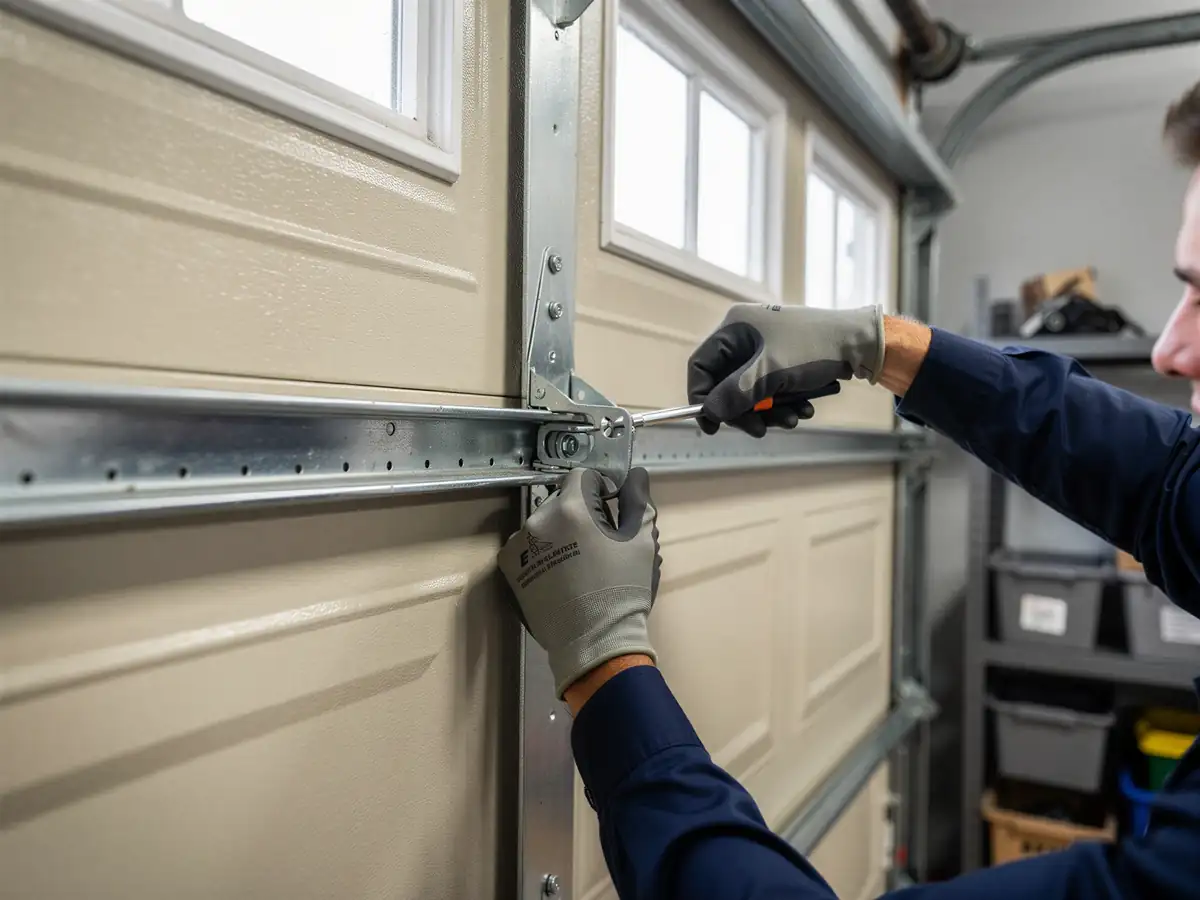
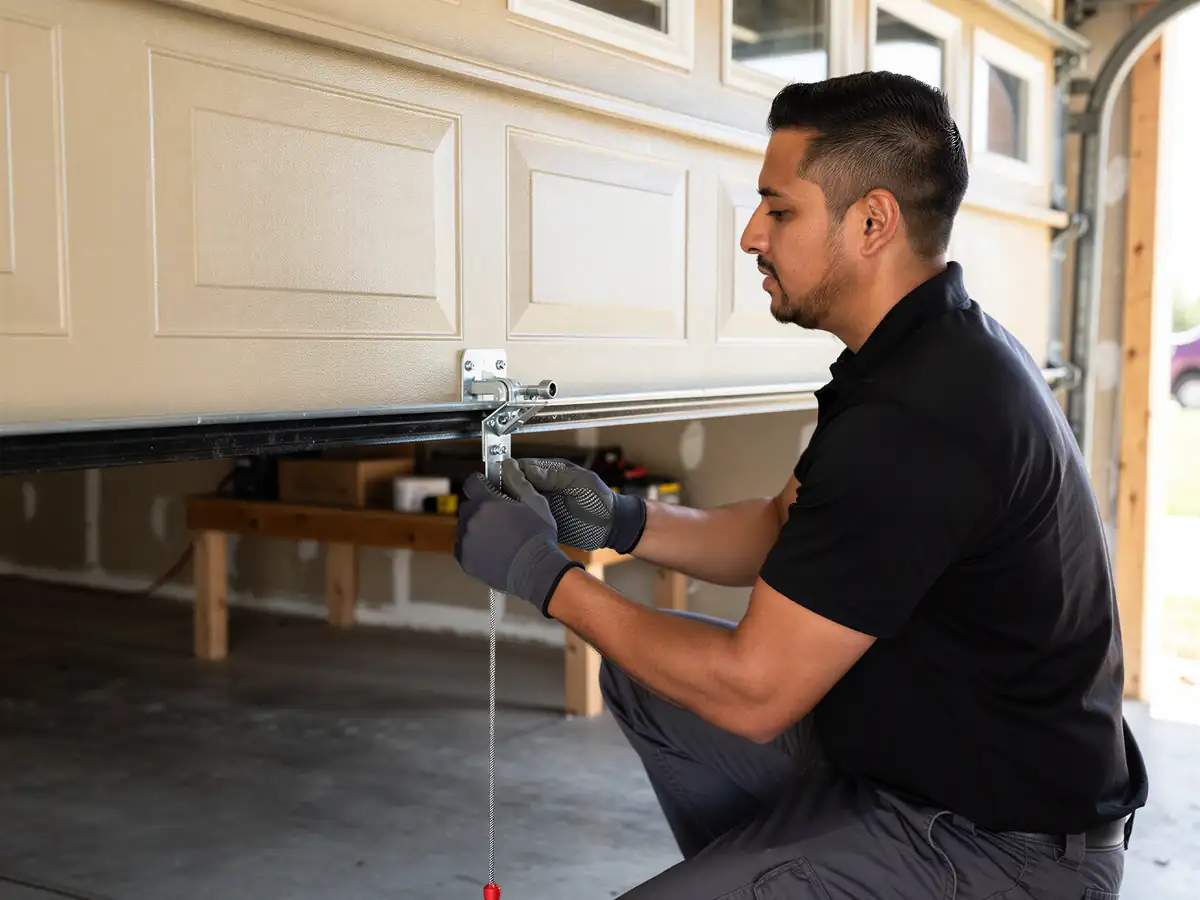
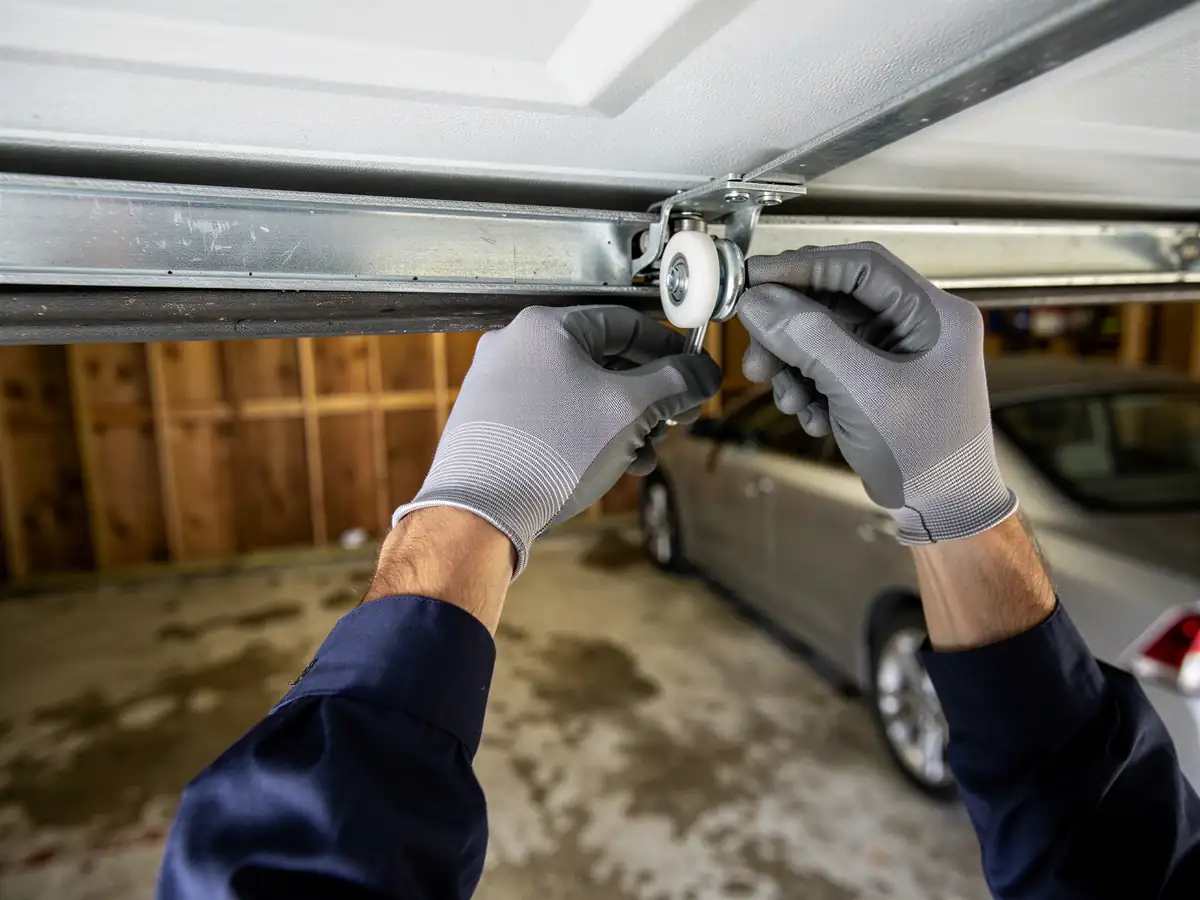
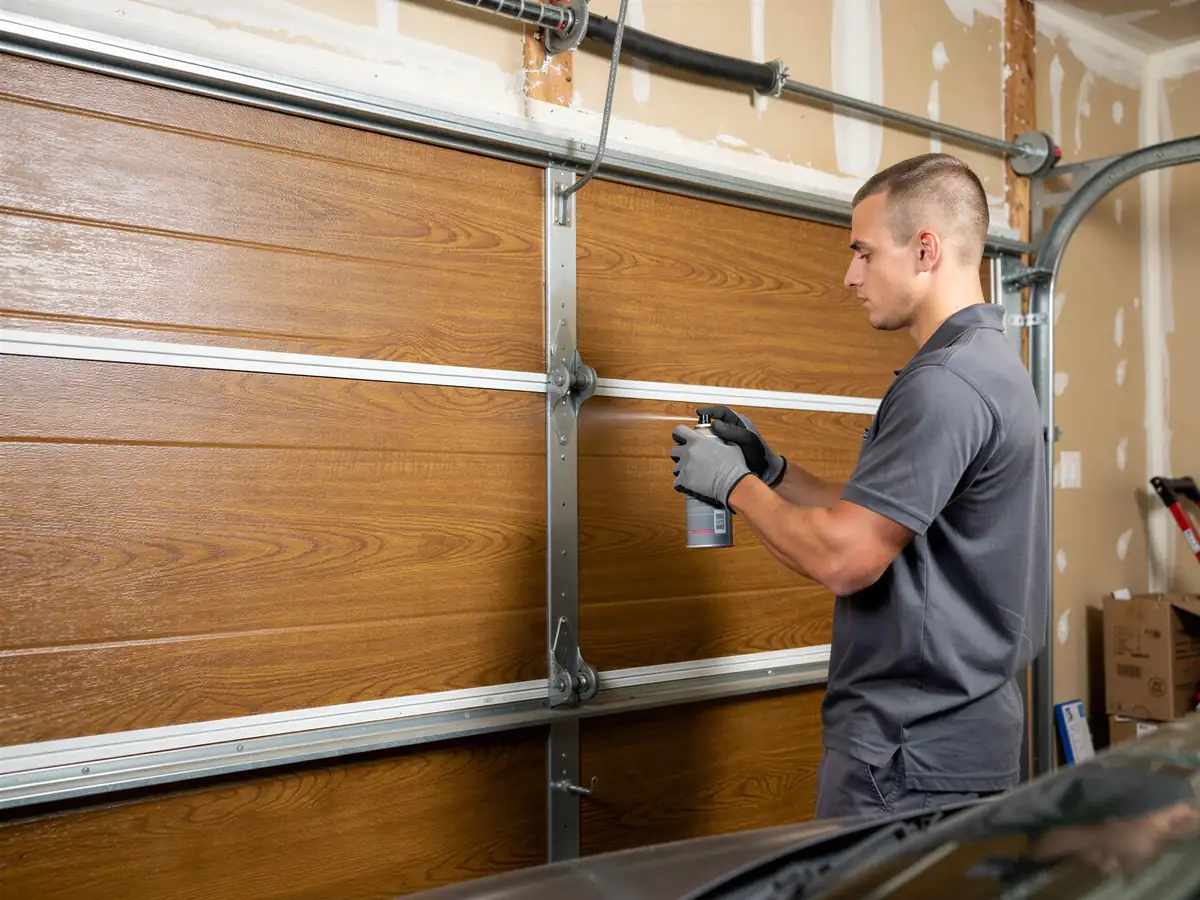
Start by watching the door move, not just listening. Rollers should turn as they travel - if one's sliding instead of spinning, that's your grinding noise. Check hinges for visible wear, especially on doors where the panels don't sit flush anymore. Give the track a look for anything loose at the brackets; on a 40-plus-year-old door that's common wear, not damage. Lubricating the moving metal parts twice a year does more good here than in a drier climate, because the humidity works lubricant out faster. We'd rather tell you to grease a hinge yourself than send a truck for something a five-dollar can of lithium grease fixes. If after checking rollers, hinges, and track brackets the noise is still there, especially a deep thud or a snap, that's spring or cable territory, and that's not a check-it-yourself job.
My garage door got loud right after a cold night, is that normal?
It can be. Metairie's climate stays mild with only occasional freezes, but even a short cold snap tightens metal and stiffens old lubricant. If your door was already due for a tune-up, a cold night often reveals it suddenly instead of gradually. Lubricate the hinges and rollers first; if the noise persists, have it checked.
Why does my neighbor's door sound different from mine if our houses are the same age?
Housing in this area spans 1958 to 2001, so even similar-looking houses can have openers and hardware from different decades. A 1980s chain-drive opener runs louder by design than a newer belt-drive. The age of the actual door hardware, not just the house, determines the sound.
Is a squeaky door dangerous or just annoying?
Usually it starts as just annoying - dry rollers or hinges. But ignored long enough, dry metal wears faster and can lead to a roller seizing or a hinge cracking, which then puts stress on the cables and springs. Catching a squeak early is cheaper than fixing what it turns into.
Ready to get your garage door sorted?
Tell us what it’s doing and where you are in Metairie - we’ll take it from there.