What the Weather Here Does to It
Metairie sits a couple miles southeast of the in a climate band that stays mild most of the year but still gets occasional freezes
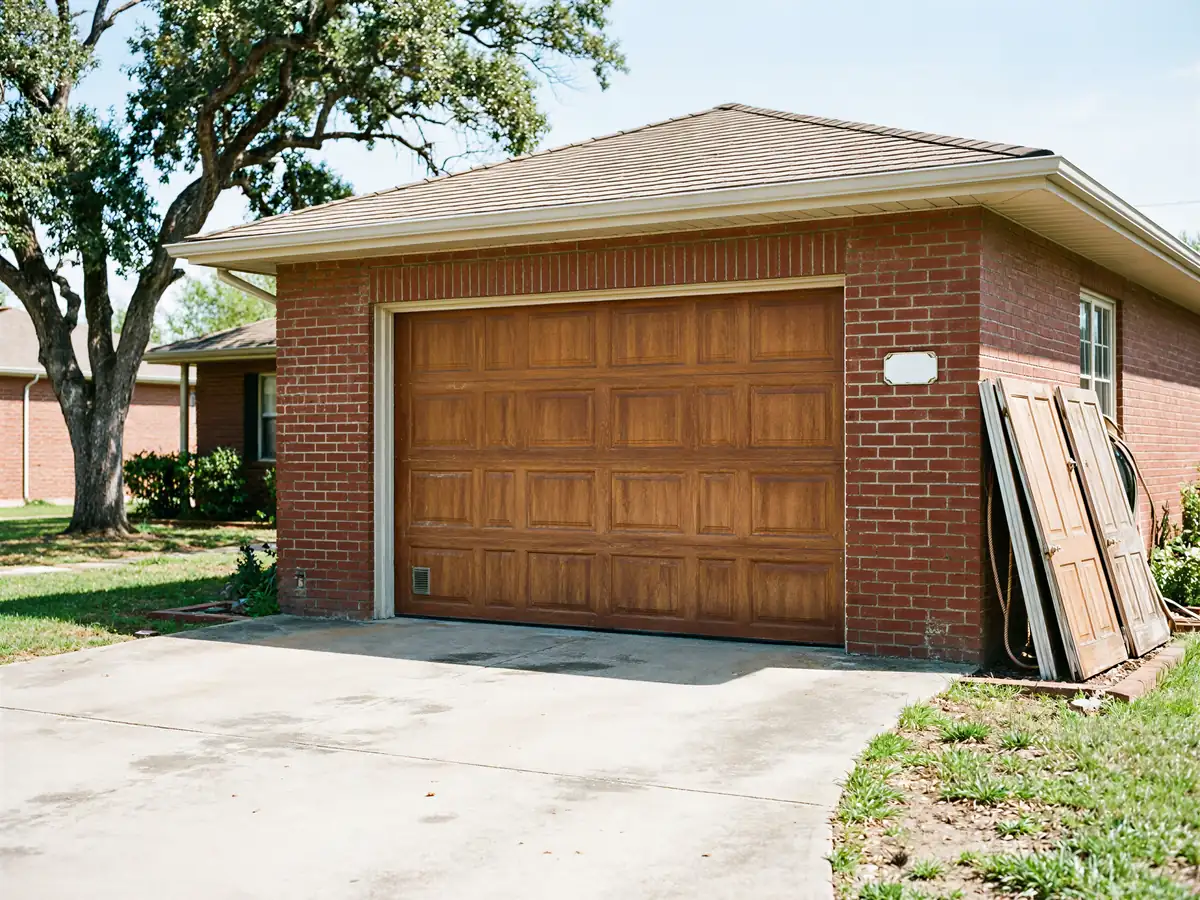
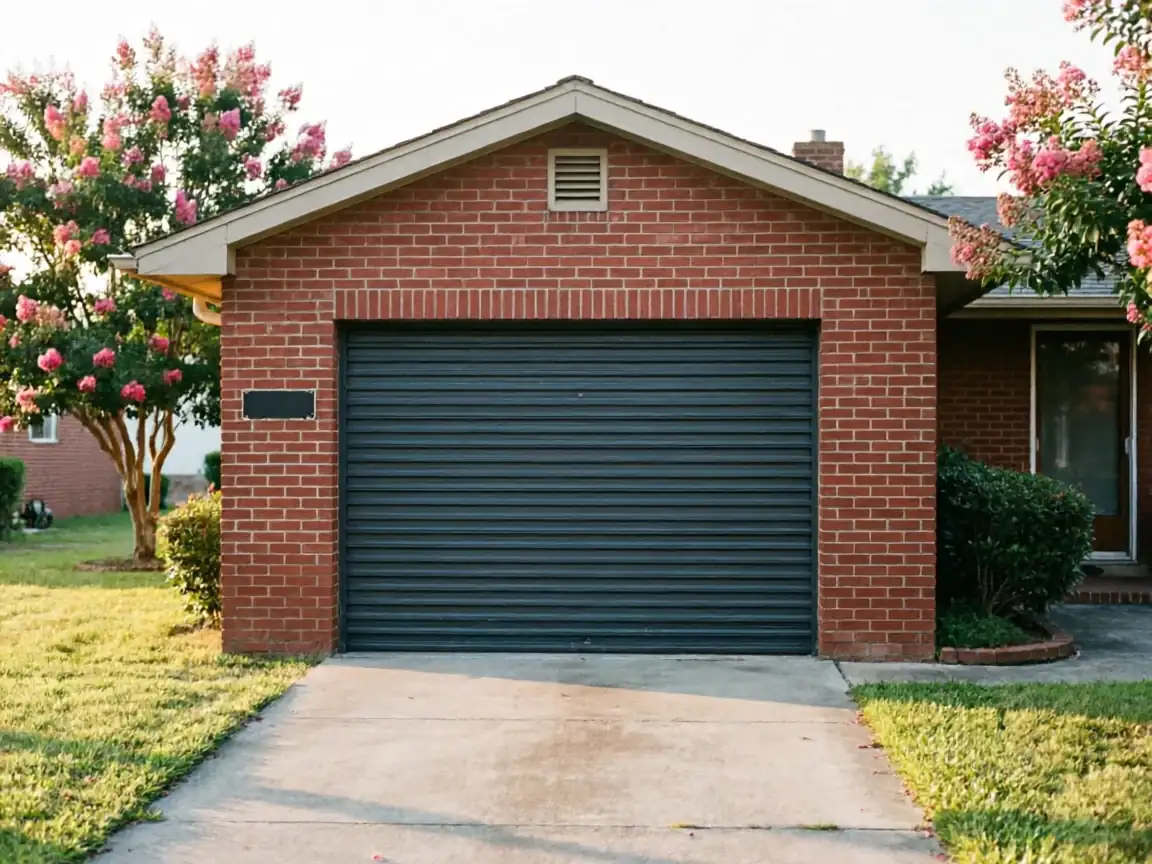
That swing matters more than people think for a door built decades ago. Most homes in this area went up between 1958 and 2001, with the typical house dating to around 1980. A lot of those original steel sectional doors were never insulated - insulation wasn't standard on mid-century tract construction here the way it is on new builds.
What that means in practice
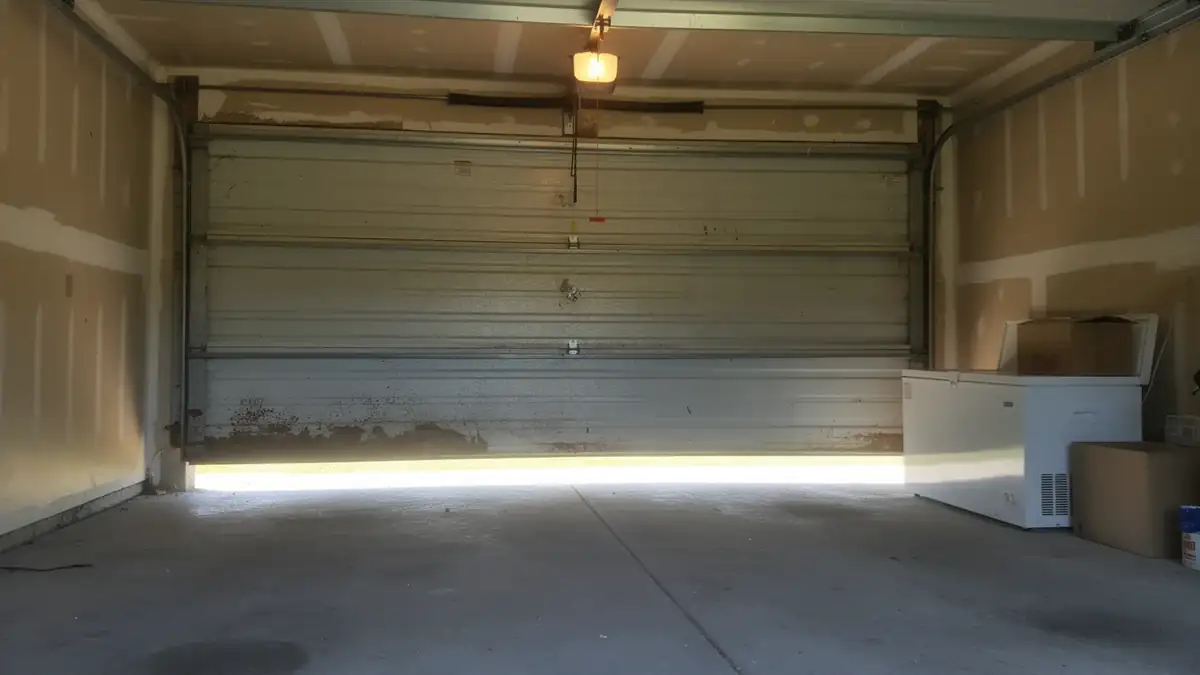
A single-skin steel panel that sits in summer heat all day, then cools fast on one of the rarer cold nights, expands and contracts at the seams and around the hinges. Over enough years that stress shows up as hairline cracks in the paint, loosened hinge screws, and galvanized hardware that starts to pit. None of this is dramatic on its own. It's slow wear that adds up on a door that's already 30 to 60 years old, built for a climate expectation that didn't include the insulation and sealing standards used today.
- 60 years
If your door still has its original panel and track, the freeze-thaw cycling, mild as it is here, has likely been working on it longer than you've owned the house
When to Get Help
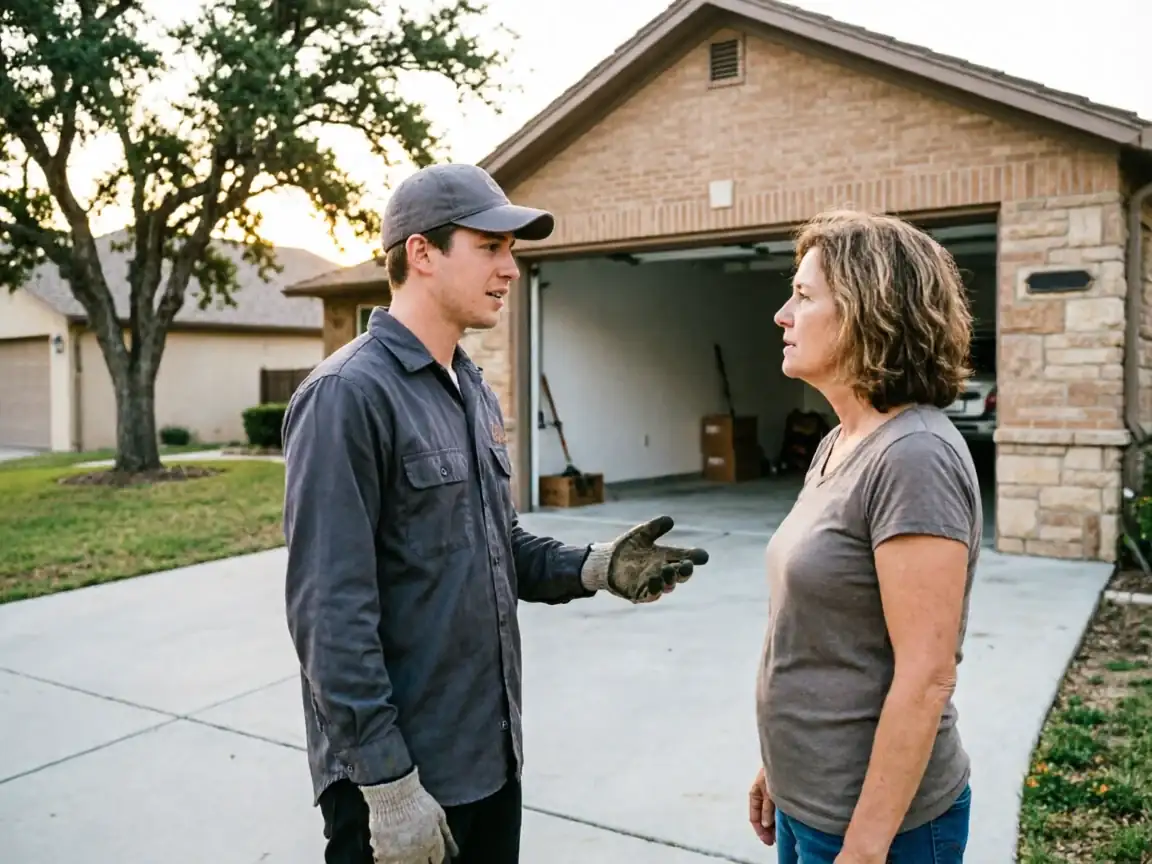
Across the service area there are roughly 82,882 owner-occupied houses, and a large share of them still carry whatever door came with the house when it was built sometime in that 1958-2001 window. If yours is one of them, a few signs mean it's past time to just keep adjusting things yourself.
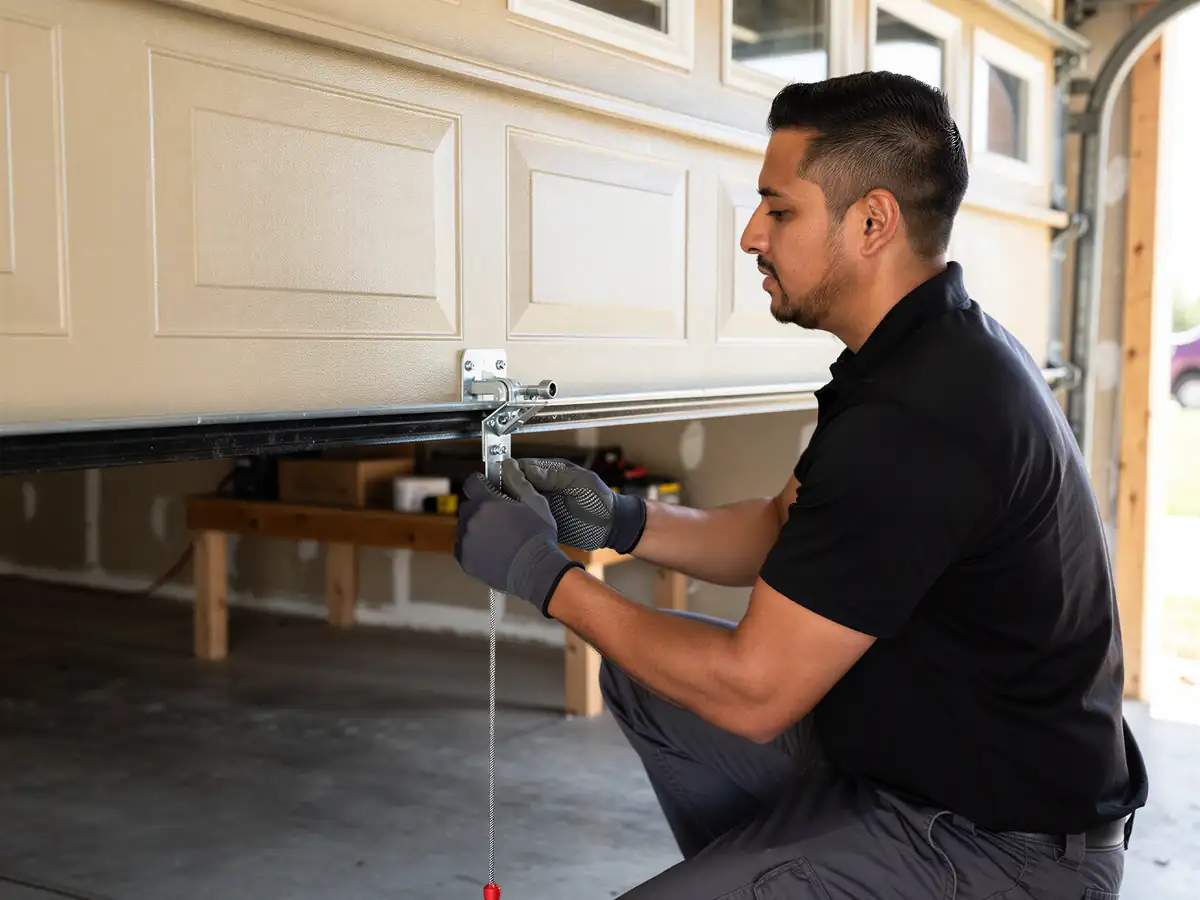
A door that slams the last foot of travel instead of settling has lost spring tension - that's not a lubrication fix. Cables that look frayed or kinked anywhere along their length need replacing before they snap, not after. An opener that strains, reverses, or stalls on a door that used to run quiet is usually fighting a balance problem, not an opener problem, and swapping the opener without fixing the balance just wears out the new one faster.
Here's the honest limitation: if the door is original to a house built early in that 1958-2001 range, and the track is bent or the panel is rusted through at the bottom, repair parts for that specific vintage are sometimes harder to source than just replacing the section or the whole door. We'll tell you straight if that's where you're at instead of billing you for a patch that won't hold.
What Is Going On
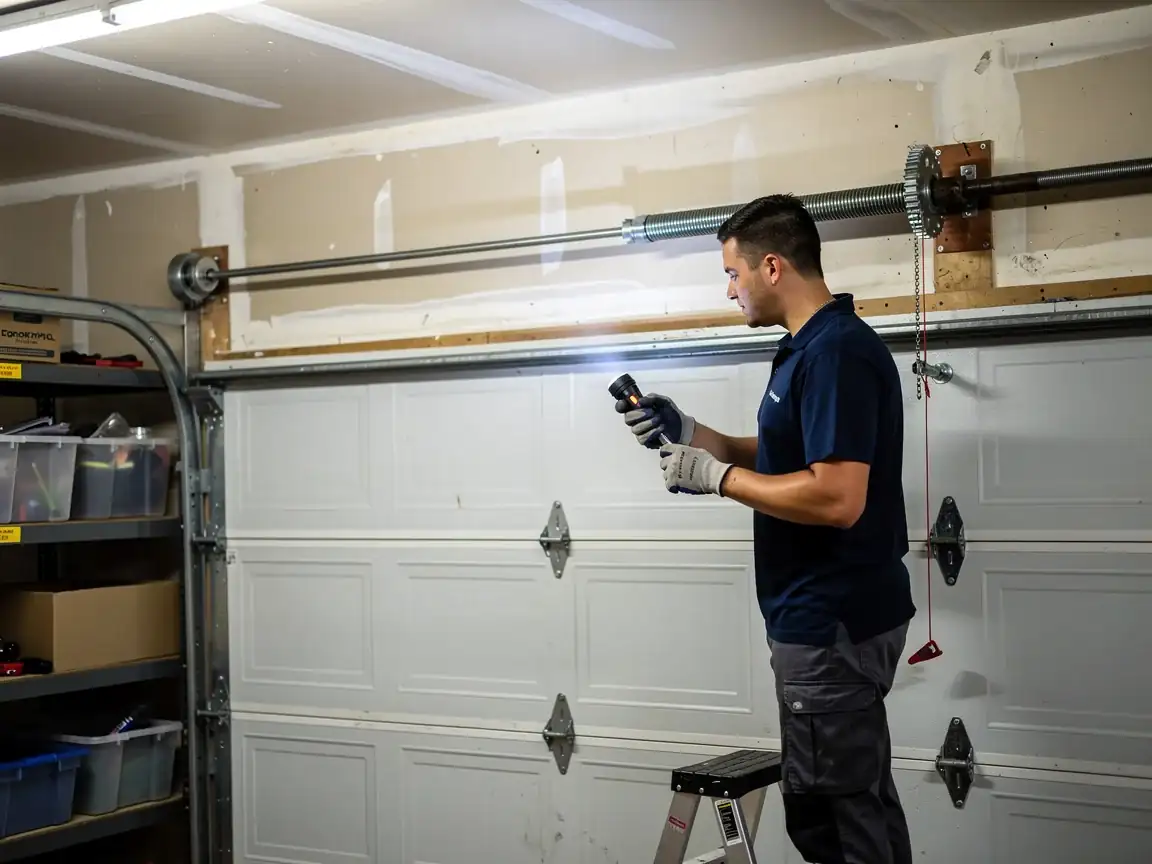
The typical Metairie garage door, going by the age of the housing stock here (median build year around 1980), is a roll-formed steel sectional door on a torsion or extension spring system sized for the weight it carried when new. Thirty-plus years later, a few things have usually changed: the spring has cycled tens of thousands of times and lost tension, the roller tracks have picked up rust at the low points, and the weight of the door itself may have crept up from repainting or added hardware.
With median household income in the service area at $67,099, most repair decisions here come down to a real budget question, not just what's technically possible. A torsion spring replacement is usually a straightforward job. A full door replacement is a bigger spend, and whether it makes sense depends on how much the existing frame, track, and opener are still worth saving.
What's actually going on with most service calls on older doors in this area is spring fatigue and track misalignment working together - the spring stops carrying its share of the weight, so the opener and track take more strain than they were built for, and that's when something finally gives.
What to Check
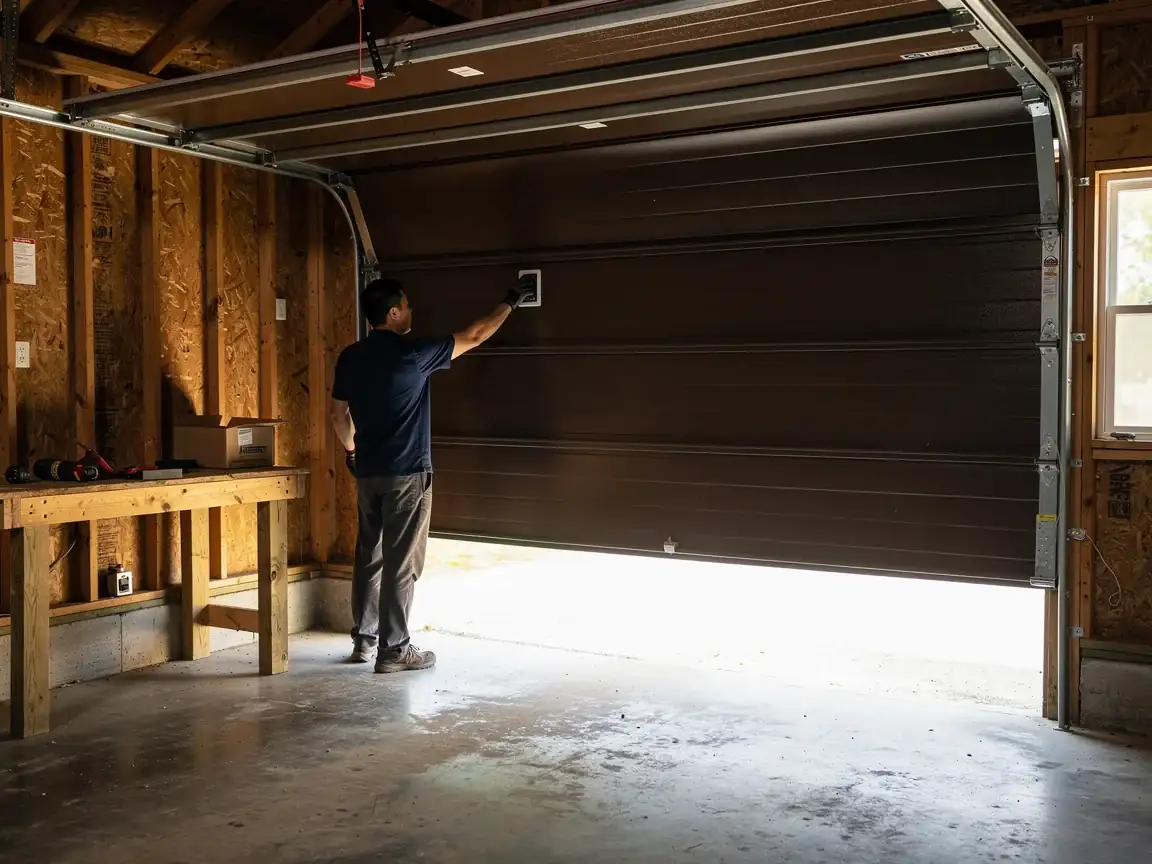
Start with the balance test: disconnect the opener, lift the door by hand halfway, and let go
A door in good balance stays roughly where you left it. One that drops or shoots up means the spring tension is off, and that's not a DIY spring adjustment - torsion springs under load can cause real injury.
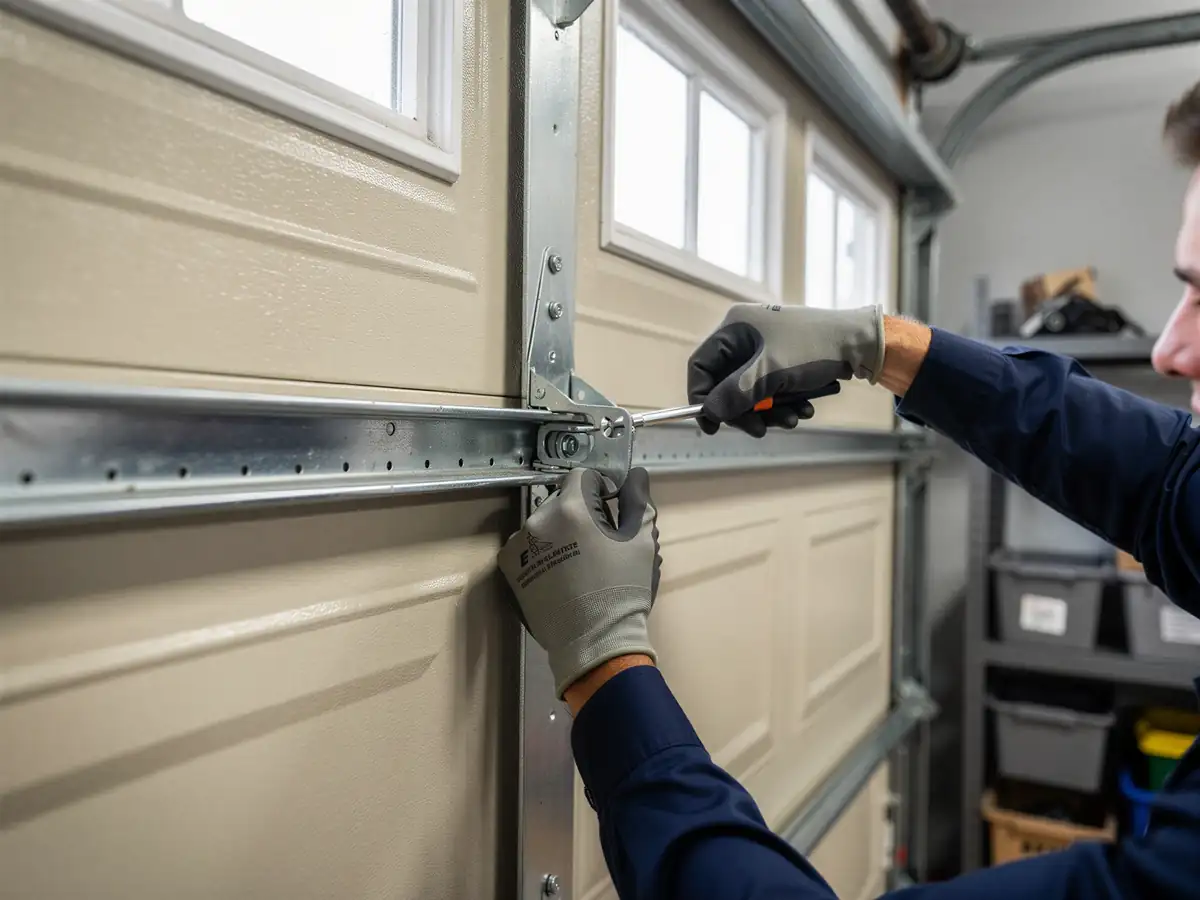
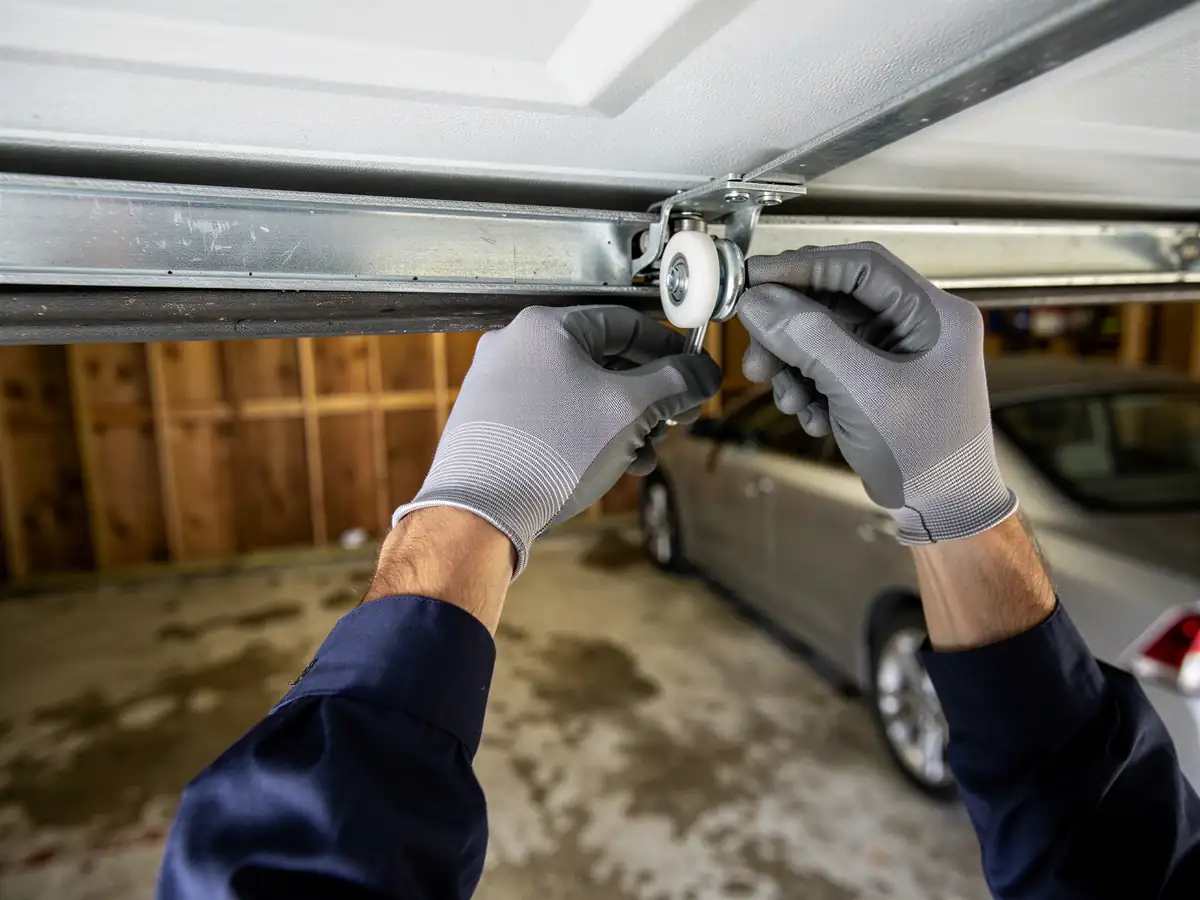
Next, look at the bottom corners and the track low points for surface rust
Especially if the door is original to a house from the earlier end of the 1958-2001 build range here. Mild rust can be caught early; rust that's eaten through metal usually means a section replacement.
Check the weatherstripping at the bottom panel
On a mild climate with occasional freeze nights, a gap there lets in enough cold air on the rare hard freeze to matter, and it's cheap to replace.
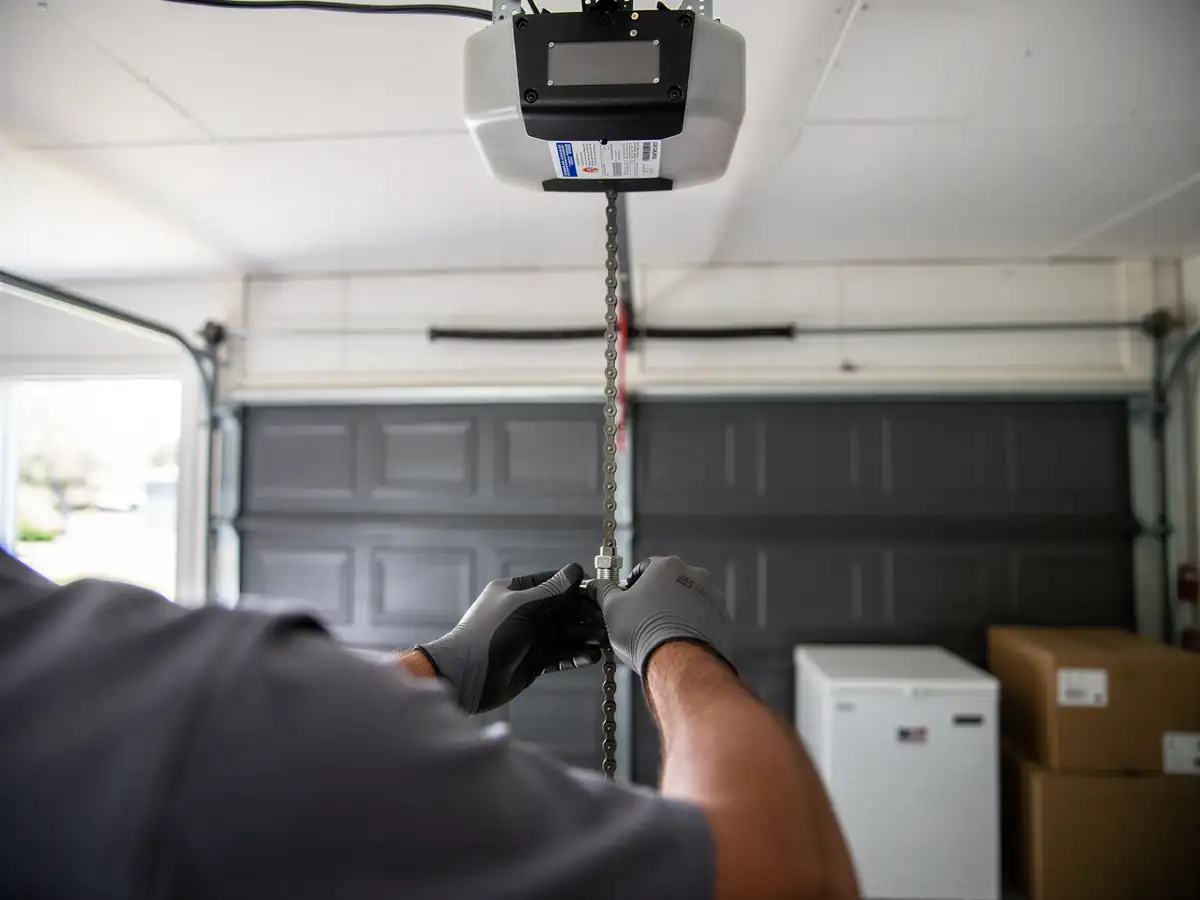
Last, listen to the opener on a full open-close cycle
Grinding, hesitation, or a motor that runs longer than it used to are early signs the system is compensating for something mechanical, not electrical. Catching that before the opener itself fails saves you a second repair bill on top of the first.