The Cost of This Job
Waggaman's median household income sits at $59,566
Which puts a straight roller swap well inside the repair column, not the replace one. Nylon rollers on a standard double door are one of the cheaper jobs we run, and at this income level it almost never makes sense to replace a whole door over worn rollers alone, even when the track is scored from years of a steel roller grinding against it. The math changes if the track itself is bent or if the opener has been straining against bad rollers long enough to burn out a drive gear - at that point you're paying for two repairs instead of one, and it's worth asking us to look at both while we're out. We quote the roller job and the track condition separately so you're not guessing which dollar is buying what. Most of the houses we see out this way went up around 1981, and doors from that era were built with steel rollers as standard - noisy, short-lived, and usually the first thing worth upgrading to nylon when they go.
- $59,566 median household income
We're coming from Metairie, about 5 miles east
So the job itself is priced the same as it would be closer in - there's no separate trip charge built into the roller swap.
- 5 miles
How It Shows Up
On a house built around 1981, the symptom is almost always the same: a grinding or rattling noise as the door travels, getting louder near the top of the run where the roller sees the most load reversing direction. Steel rollers from that build era ride in stamped brackets with little tolerance for grit, and over four decades of New Orleans-area humidity and the occasional freeze, the bearings dry out and the wheel starts riding unevenly in the track. You'll often feel it before you hear it - the door hesitates or shudders a few inches before the bottom panel, right where a sagging roller finally catches.
Southeast Louisiana's mild climate with occasional freeze doesn't crack rollers the way a hard winter would further north, but the humidity swings do the opposite job - rust forms inside the roller stem and the wheel stops spinning freely, so it starts scraping instead of rolling. If you see rust streaks on the track itself, that's usually the roller, not the hardware.
Doing It Yourself
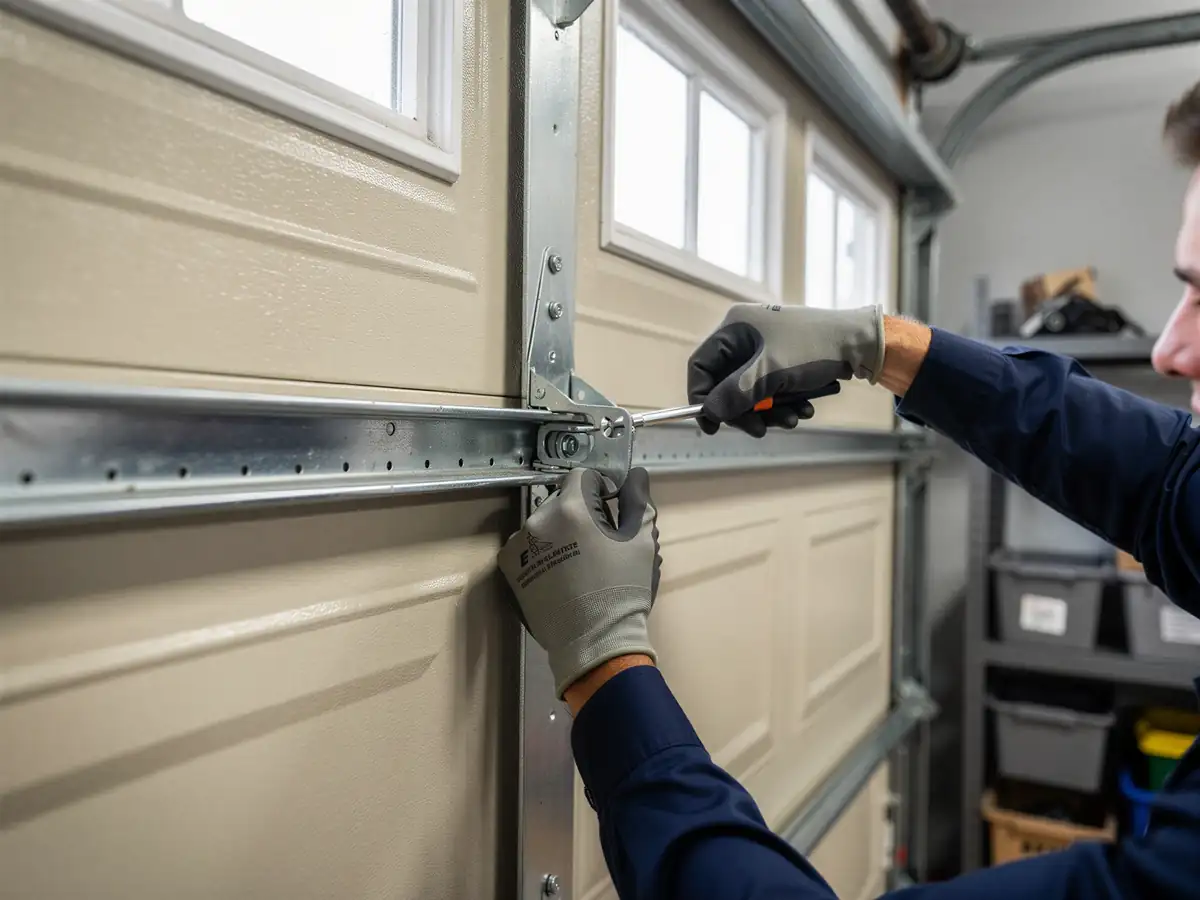
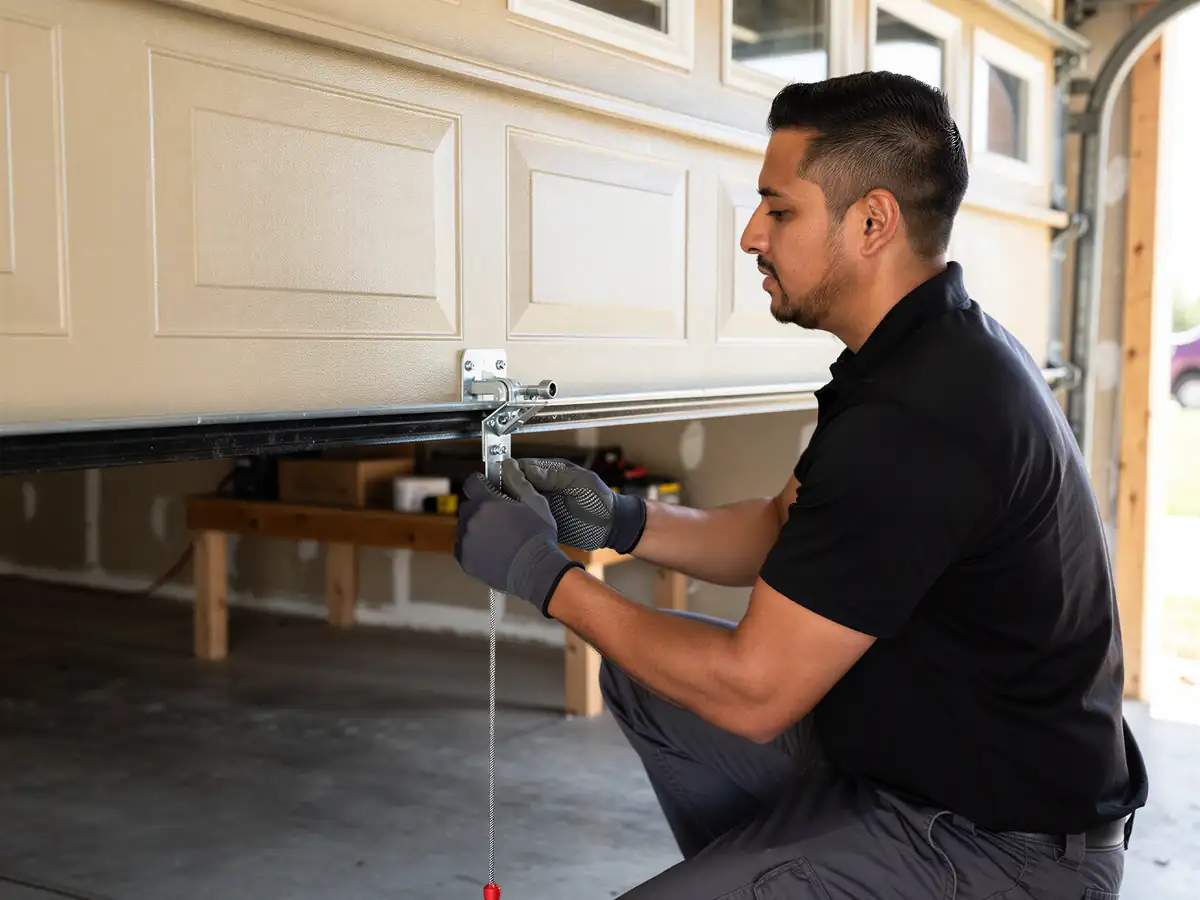
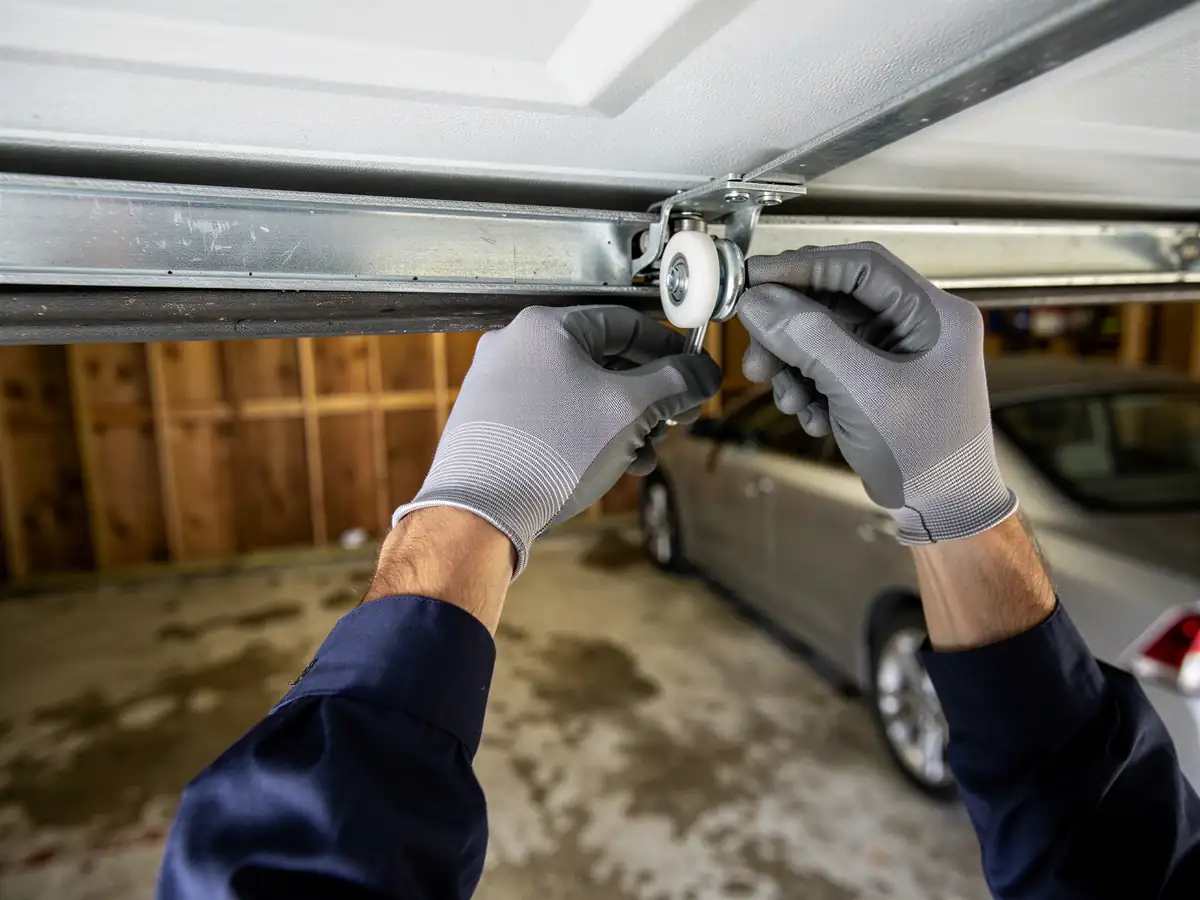
Swapping a bottom roller on an unloaded section is a reasonable DIY job if the door is down and the opener is unplugged. Pull the hinge, slide the old roller out of the track, drop in a new nylon one with sealed bearings, and you're done in about ten minutes a side.
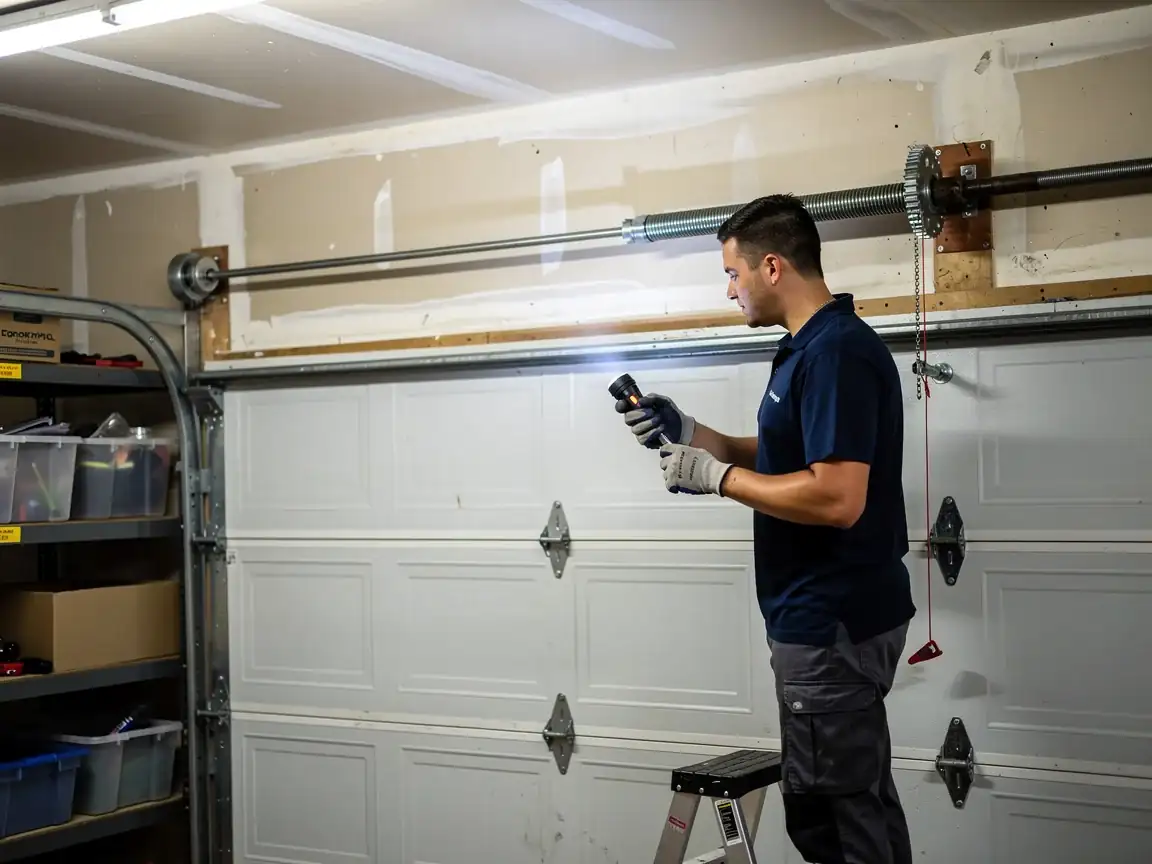
The rollers on the top section are a different story. Those sit closest to the torsion spring and the top fixture, and the door is under real spring tension even when it's sitting still. We don't recommend opening that bracket yourself - it's the one place on this job where a slip costs you a finger, not a Saturday. If a roller up there is gone, that's a call-us job, not a project.
One honest limit: if more than two or three rollers on one door are shot, we'd rather replace the full set in one visit than keep sending someone back out for each one as it fails - it's less labor cost split across the fleet than piecemeal visits.
Parts We Carry
We stock sealed-bearing nylon rollers in the stem lengths that fit the standard torsion hardware found on houses built through the 1980s and 90s
The bracket style that covers most of what's out in Waggaman and the rest of this corner of the service area. Steel rollers are available too, for owners who want to match an older setup exactly, though we'll usually recommend nylon since it's quieter and doesn't rust the way steel does in this humidity.
What we don't carry on the truck is anything custom-stamped or from a discontinued hardware line
If your bracket style is unusual, we may need to order the part, which can add a day or two to the job. We'll tell you that at the quote, not after we've already shown up.