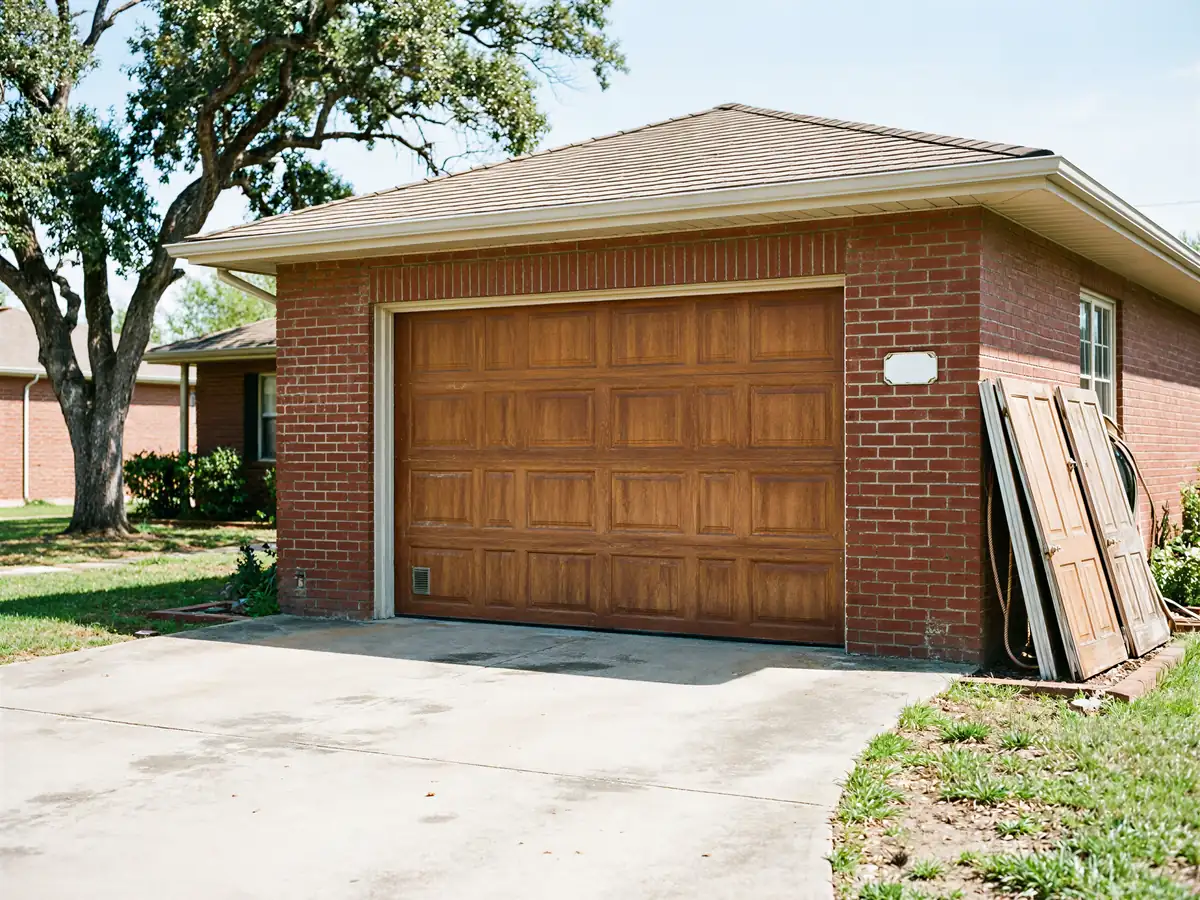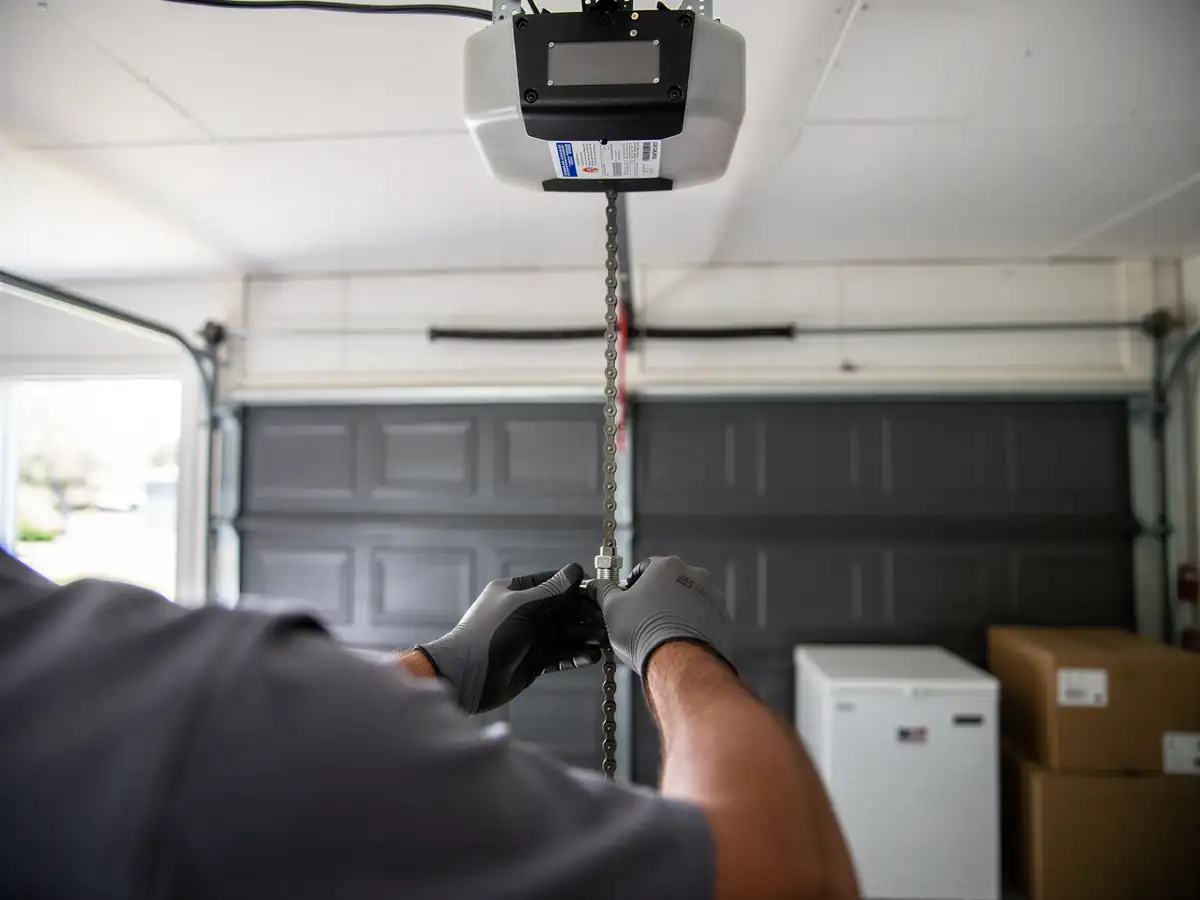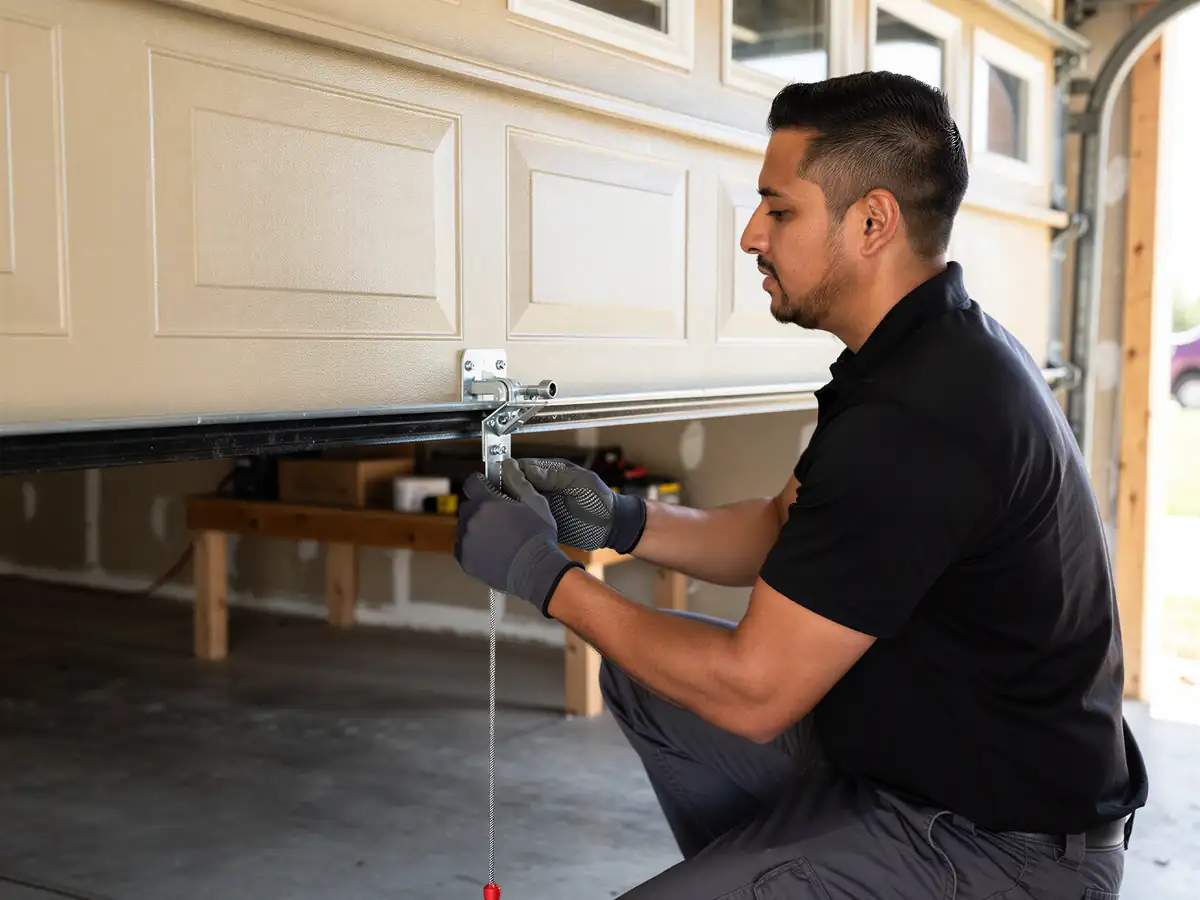
What the Fix Involves
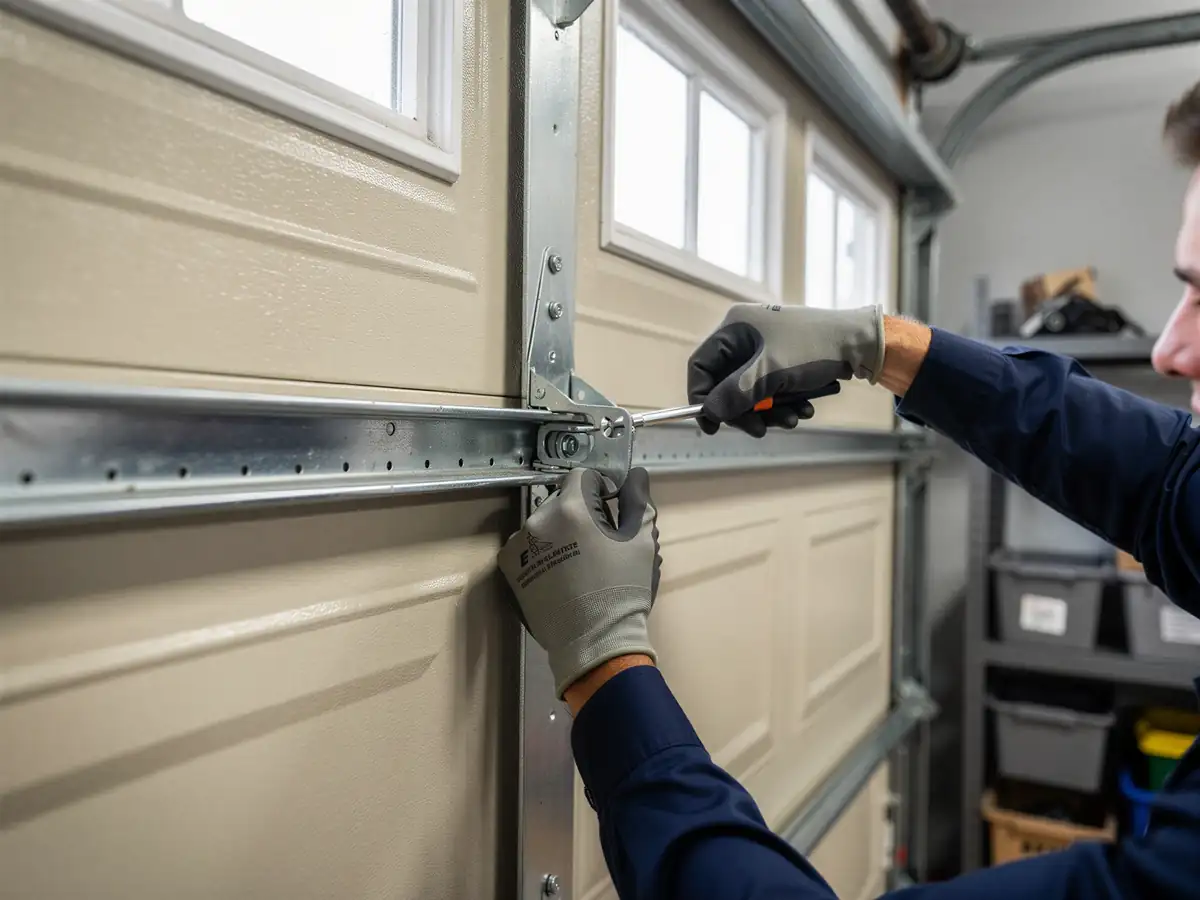
On most Avondale doors we're pulling steel rollers off steel track
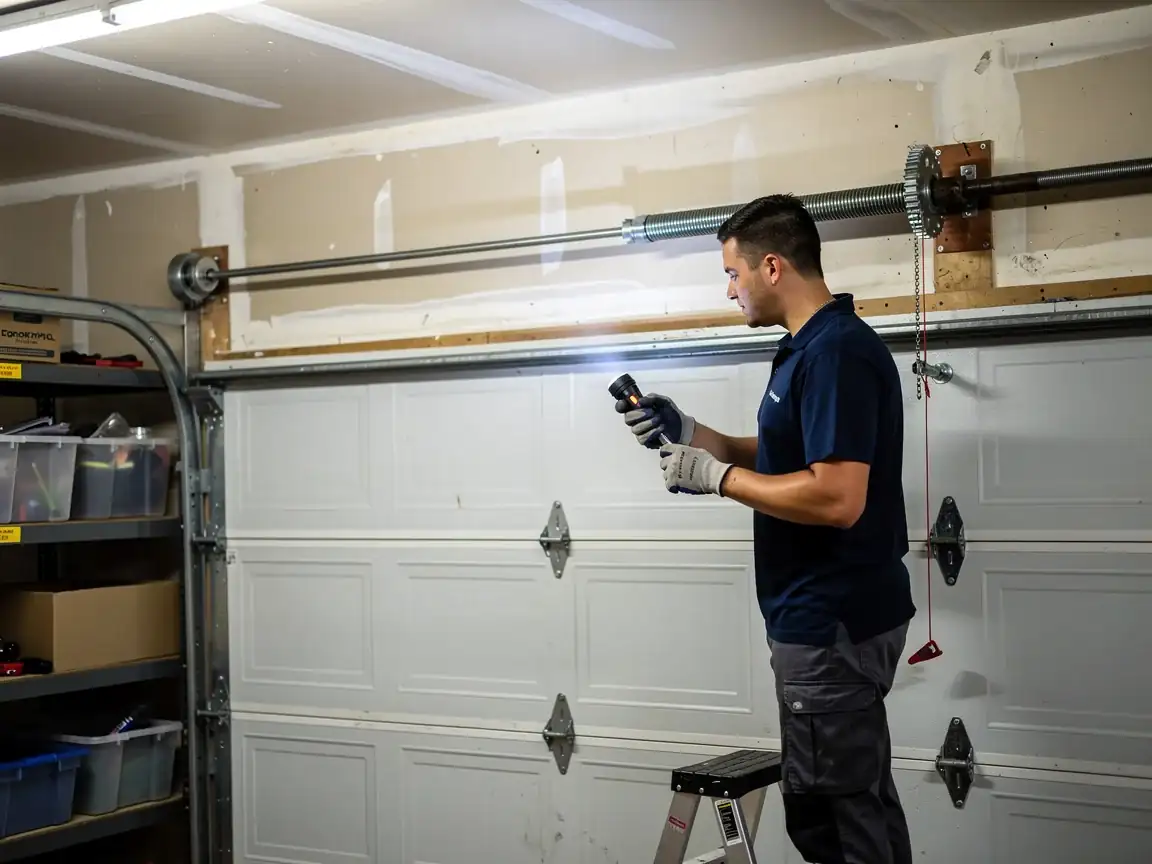
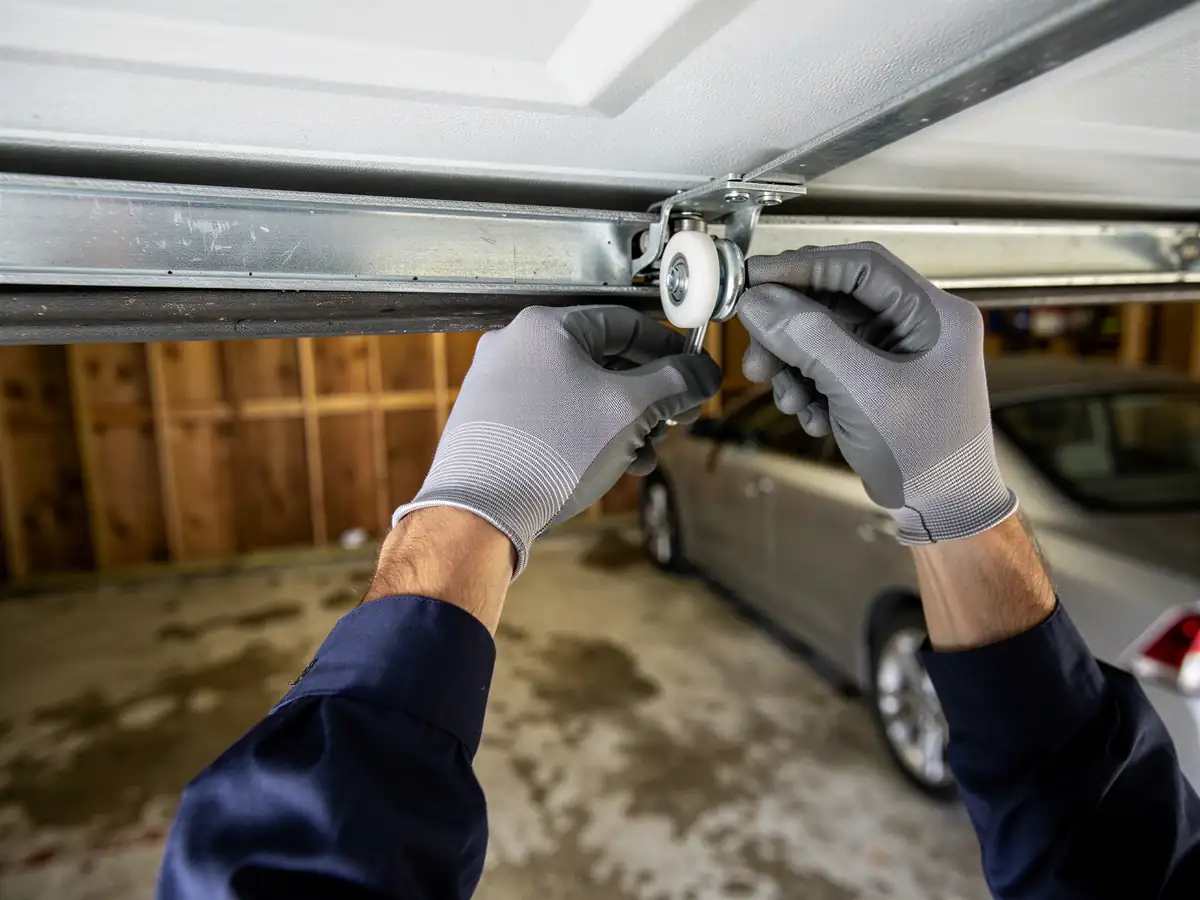
Because that's what went into houses built around 1970 in this part of the parish. The job is straightforward in theory: unload the spring tension, pull the old rollers out of the hinges and bottom brackets, set new ones in, and check that the track still lines up straight where it meets the jamb. Where it gets slower is the track itself. Fifty-plus years of steel-on-steel wear leaves grooves and flat spots that a new roller will still catch on, so sometimes the fix includes a track adjustment or a short section of new track, not just the rollers.
We size the roller to the door, not the other way around
Nylon rollers with sealed bearings run quieter and don't need the lubrication steel ones do, but they're a different stem length and wheel diameter than what's original on a 1970s door, so we measure before we order rather than assuming one size fits every bracket. If the hinges or bottom brackets are bent or rusted through, we'll say so and price those separately - a roller swap doesn't fix a bent hinge.
This is a visit from our Metairie shop
We don't keep a branch or a stock of parts sitting in Avondale, so what we bring is what we carry in the truck that day.
How It Shows Up
The usual first sign is noise - a grinding or clicking as the door moves, worse on the way down than the way up, coming from one spot on the track rather than the whole run. On a door that's original to a 1970-built house, that's almost always a steel roller that's worn its bearing surface down to bare metal and is now riding on flat spots instead of a round wheel.
The second sign is binding. The door hesitates at the same point every cycle, or the opener strains and reverses before it reaches the floor. That's usually a roller that's seized in its track groove rather than rolling through it, dragging the whole panel instead of carrying it.
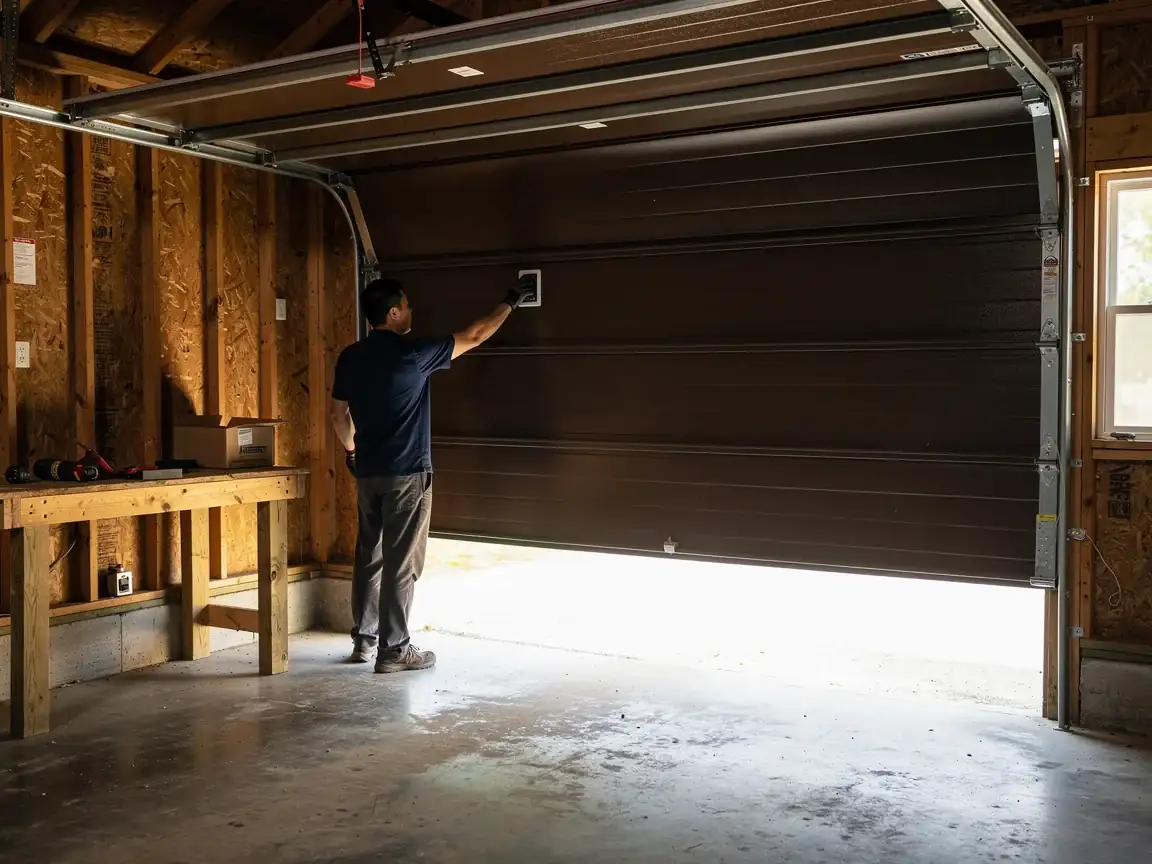
A third sign, less obvious, is a door that looks slightly crooked when it's halfway open - one side riding higher than the other. That points to rollers wearing unevenly between the two tracks, which happens more on doors that get used several times a day for years without anyone oiling the hardware. None of these mean the door is done. They mean the rollers are done, and on houses this age, that's a repair worth making before it turns into a track or cable problem.
The Cost of This Job
Avondale's median household income sits at $47,561, well under the $67,099 median across the wider service area we cover from Metairie. That gap matters for how we talk about this repair: roller replacement is one of the lower-cost jobs we do on a garage door, because you're paying for a set of rollers and the labor to install them, not a new door, a new opener, or new track the whole way up. For a household at or near Avondale's median income, that puts this job clearly on the repair side of the repair-or-replace line, not the side where it makes more sense to put the money toward a new door instead.
Where the math changes is if the track is bent beyond adjustment, or if the door itself is sagging from age rather than just noisy rollers. At that point you're not comparing roller cost to roller cost anymore - you're comparing a bigger repair bill to the price of a new door, and for an older door that's already had other issues, replacement sometimes wins that comparison. We don't have a published price list to quote here, and we won't invent one - what we can tell you is which side of that line a straightforward roller job falls on for most houses in this area.
How Long It Takes
We don't have a fixed number to give you for this one
And we'd rather say that than make one up. A roller swap on a door where the track is straight and the hardware is otherwise sound is a short job. A roller swap on a door where the track has fifty years of wear grooves in it, or where a hinge is bent, or where the previous owner mixed roller sizes trying to fix it themselves, takes longer because the track work has to happen first.
What we can tell you is what adds time
How many of the rollers are actually bad (sometimes it's all of them, sometimes it's the two bottom ones taking all the weight), whether the track needs re-aligning, and whether the spring tension has to come off and go back on more than once to get the door swinging true. None of that is unique to Avondale, but the age of the housing stock here - mostly 1970s - means track wear is a more common add-on than it would be on a door installed in the last decade. We'll tell you what we find once we're looking at the actual door, not before.
Doing It Yourself
Swapping a single roller on an open-track section, with the spring tension fully released, is within reach for someone comfortable with basic tools and willing to work carefully around a loaded spring. Swapping rollers while the door is still under tension, or working on the bottom bracket where the lift cable attaches, is where people get hurt - that bracket holds cable under load even with the door down, and it's not a place to learn on the job.
If you're set on doing it yourself, match the roller stem length and wheel diameter to what's already in the track rather than guessing from a hardware store display; a size mismatch is the most common reason a DIY roller job comes back worse than it started. If the door is sticking, binding, or dropping unevenly rather than just making noise, that's track or cable involvement, and at that point we'd tell you to call rather than keep adjusting it yourself.
For general service on an Avondale garage door beyond just the rollers, our Avondale service page covers what else we handle out here.
What Causes It Around Here
The service area runs a mild climate with occasional freeze, which doesn't do the damage that hard freeze-thaw cycles do farther north, but humidity year-round still works on steel hardware that isn't sealed. On steel rollers, that shows up as surface rust inside the bearing before it shows up anywhere visible, which is part of why the noise starts before anything looks wrong.
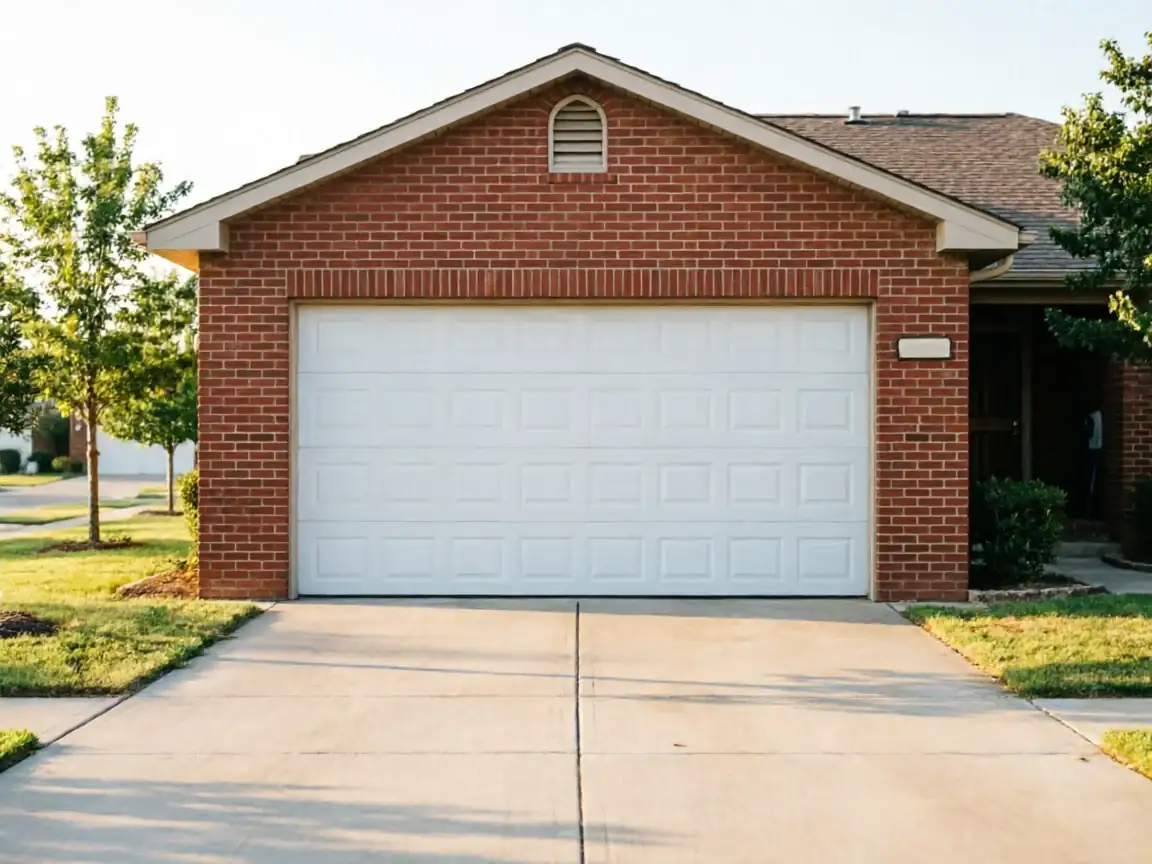
The bigger driver here is simply age of stock. Most Avondale houses went up around 1970, a decade earlier than the service area's overall median of 1980, which means more of what we find out here is original hardware that's never been upgraded - steel rollers on steel track, done the way it was done when the house was built. With only 1,743 households in Avondale, this isn't a market with a steady churn of new construction bringing in factory-fresh nylon rollers and sealed track; it's mostly older gear that's been kept running, repair by repair, rather than replaced wholesale. That's not a problem with the area - it just means the rollers on an Avondale door have usually had more years to wear than the rollers on a newer build elsewhere in the metro. For broader background on this job, see our Metairie roller replacement page.